Hi there! If you love a curry with a little sweetness, plenty of aroma and a silky coconut gravy, this Sri Lankan pumpkin curry deserves a place on your table.
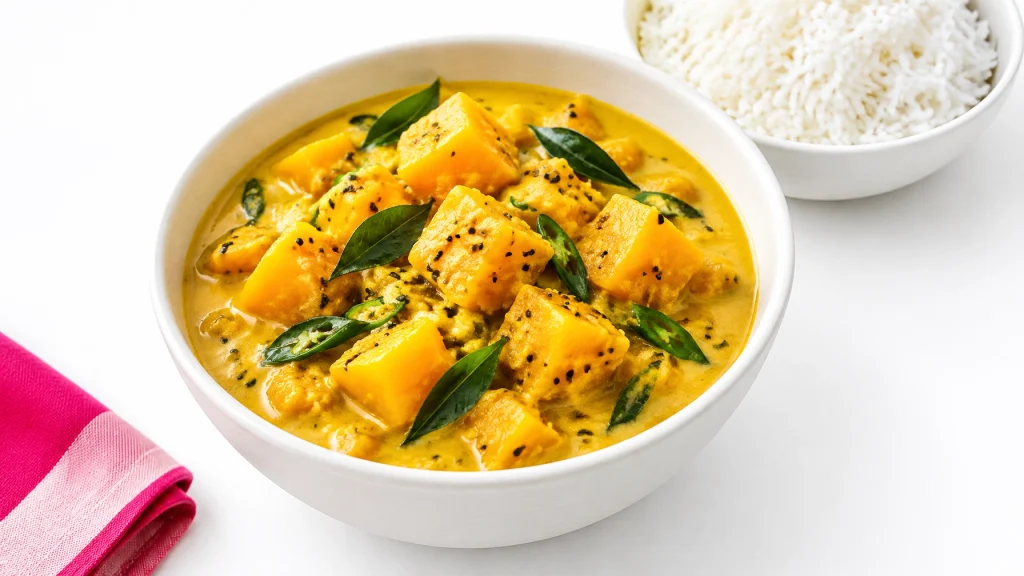
Known as wattakka curry, this golden vegetable curry combines tender pumpkin with mustard seeds, curry leaves, turmeric, green chillies and coconut milk. The flavour is gently sweet, savoury and warmly spiced (comfort food with excellent manners).
It is a classic part of a Sri Lankan rice and curry spread. The soft pumpkin balances fiery sambols, tangy pickles and richer meat or fish curries. That sweet-savoury contrast matters. A Sri Lankan meal is not just about one bold dish; it is about how several flavours work together on the same plate.
This version is simple enough for a weeknight and special enough for a festive table. Serve it with rice, yellow rice or roti, and let the creamy gravy do the delicious work.
What you need
Serves: 4
Prep time: 15 minutes
Cook time: 25–30 minutes
Spice level: Mild to medium
You can find pantry staples through the Sri Lanka Stores Grocery category, while the Spices category is useful for building your Sri Lankan spice cupboard. For coconut milk and related ingredients, browse Coconut Products.
Ingredients
- 700 g pumpkin, peeled, deseeded and cut into chunky 2–3 cm cubes
(Butternut squash works beautifully, too.) - 1 medium red onion, thinly sliced
- 2 green chillies, split lengthwise
- 10–12 curry leaves
- 2 garlic cloves, finely chopped
- 1 tablespoon neutral oil or coconut oil
- 1 teaspoon black mustard seeds
- ½ teaspoon fenugreek seeds
- ½ teaspoon ground turmeric
- 1 teaspoon chilli powder, or less to taste
- 1–2 teaspoons roasted curry powder, optional
- 1 cup thin coconut milk
- ½ cup thick coconut milk or coconut cream
- ½ teaspoon sugar, optional
- ¾ teaspoon salt, plus more to taste
Shopping tip: Fresh pumpkin gives you a naturally sweet curry. Canned coconut milk is perfectly practical, but shake the can well before measuring so the thin and thick portions combine evenly.
How to make Sri Lankan pumpkin curry
1. Cut the pumpkin into sturdy pieces
Peel the pumpkin and remove the seeds. Cut it into chunky, evenly sized pieces.
Avoid cutting the pumpkin too small. Little cubes cook quickly and can turn soft before the sauce develops its flavour. Aim for pieces that are large enough to pick up with a spoon without collapsing.
If you are using butternut squash, follow the same approach. It holds its shape particularly well.
2. Temper the mustard seeds and aromatics
Place a medium saucepan or deep frying pan over medium heat. Add the oil.
Once the oil is hot, add the mustard seeds. Let them sizzle and pop for 20–30 seconds. Add the fenugreek seeds, sliced red onion, green chillies, curry leaves and garlic.

Cook for 3–4 minutes, stirring often, until the onion begins to soften and the curry leaves smell wonderfully fragrant.
Do not let the fenugreek seeds burn. They add a lovely earthy bitterness in small amounts, but burnt fenugreek can make the whole curry taste harsh. A little attention now saves a lot of dramatic sighing later.
3. Bloom the spices
Add the turmeric, chilli powder and roasted curry powder, if using. Stir for 30–45 seconds.
The spices should coat the onions and aromatics. This short cooking time helps release their aroma and gives the curry its deep golden colour.
Keep the heat at medium-low. If the pan looks dry, add a splash of water. Spices should bloom, not become crispy.
4. Add the pumpkin and thin coconut milk
Add the pumpkin pieces and gently toss them through the spiced onion mixture.

Pour in the thin coconut milk. Add the salt and optional sugar, then stir carefully.
The sugar is not there to make the curry sweet like dessert. It simply rounds out the pumpkin’s natural sweetness and balances the chilli. Start with a small amount; you can always add more later.
Bring the curry to a gentle simmer. Cover the pan and cook for 12–18 minutes, depending on the pumpkin.
5. Simmer until tender
Check the pumpkin with the tip of a small knife or fork. It should be tender but still hold its shape.
You want the edges soft and the centres creamy. You do not want pumpkin purée (unless that is your secret plan, in which case, carry on).
Stir once or twice during cooking, using a wide spoon. Be gentle. Vigorous stirring can break up the pumpkin and make the gravy cloudy and overly thick.
6. Finish with thick coconut milk
Lower the heat as far as it will go. Pour in the thick coconut milk and gently shake or stir the pan to combine.

Simmer uncovered for 3–5 minutes. Do not boil the curry hard after adding the thick coconut milk. A gentle heat keeps the gravy smooth and helps prevent the coconut milk from splitting.
Taste and adjust the salt, chilli or sugar. The finished Sri Lankan pumpkin curry should be creamy, fragrant and lightly spiced, with pumpkin pieces that remain whole.
Video: Watch wattakka curry come together
For a visual guide to the method and traditional flavour-building, watch this Sri Lankan pumpkin curry preparation:
https://www.youtube.com/watch?v=IY7ZZIAlPBU
Tips for pumpkin that holds its shape
- Cut evenly: Similar-sized pieces cook at the same speed.
- Keep the pieces chunky: Small cubes soften too quickly.
- Use a gentle simmer: A rolling boil can knock the pumpkin apart.
- Stir sparingly: Fold the curry rather than scraping aggressively.
- Choose firm pumpkin: Butternut squash is a reliable alternative.
- Add thick coconut milk at the end: This gives you a creamy sauce without requiring a long boil.
- Rest before serving: Let the curry sit for 5 minutes. The sauce thickens slightly and the pumpkin absorbs more flavour.
Troubleshooting your pumpkin curry
The pumpkin turned mushy
The pieces were probably too small, or the curry cooked too vigorously. Next time, cut larger chunks and check them earlier. You can still serve a mushy curry with rice; simply call it a rustic pumpkin curry and enjoy the cosy texture.
The curry is too watery
Remove the lid and simmer gently for a few minutes before adding the thick coconut milk. If the coconut milk is already in the pan, keep the heat low and allow the sauce to reduce slowly.
Mashing one or two pumpkin pieces into the gravy can also thicken it naturally.
The curry is too sweet
Add a little salt and a touch more chilli powder. A squeeze of lime at the table can also sharpen the flavour, although lime is optional rather than essential in this classic preparation.
The coconut milk split
The pan was likely too hot, or the curry boiled after the thick coconut milk was added. Lower the heat immediately and stir gently. The curry may not look perfectly smooth, but it will still taste delicious.
The curry tastes bitter
Burnt fenugreek or mustard seeds are usually the reason. Temper them briefly and keep the heat controlled. If the bitterness is mild, add a little extra coconut milk and a pinch of sugar to soften it.
What to serve with Sri Lankan pumpkin curry
Serve wattakka curry as part of a generous rice and curry plate. It pairs especially well with:
- Steamed white rice
- Fragrant Sri Lankan yellow rice
- Roti or paratha
- Mild Sri Lankan dhal curry
- Pol sambol or another fresh coconut sambol
- A sharp pickle or seeni sambol
- Green beans, okra or leafy mallung
For a larger spread, serve it alongside dishes like Sri Lankan dhal curry. The creamy pumpkin is particularly good at calming down fiery sides and soaking into every grain of rice.
You can also include it in a festive meal inspired by Sri Lankan lamprais. It may not be part of every lamprais recipe, but its rich colour and gentle sweetness fit beautifully into a generous celebratory table.
Final serving note
Spoon the hot pumpkin curry over rice and finish with a few fresh curry leaves if you have them. Add a little sambol on the side, mix the gravies together and take that first satisfying mouthful.
This Sri Lankan pumpkin curry is proof that a vegetable dish does not need to shout to be memorable. It is golden, creamy, gently sweet and full of aromatic detail.
Make it for a quiet weeknight, a family lunch or a table filled with friends. Have fun, and keep an extra bowl of rice nearby.