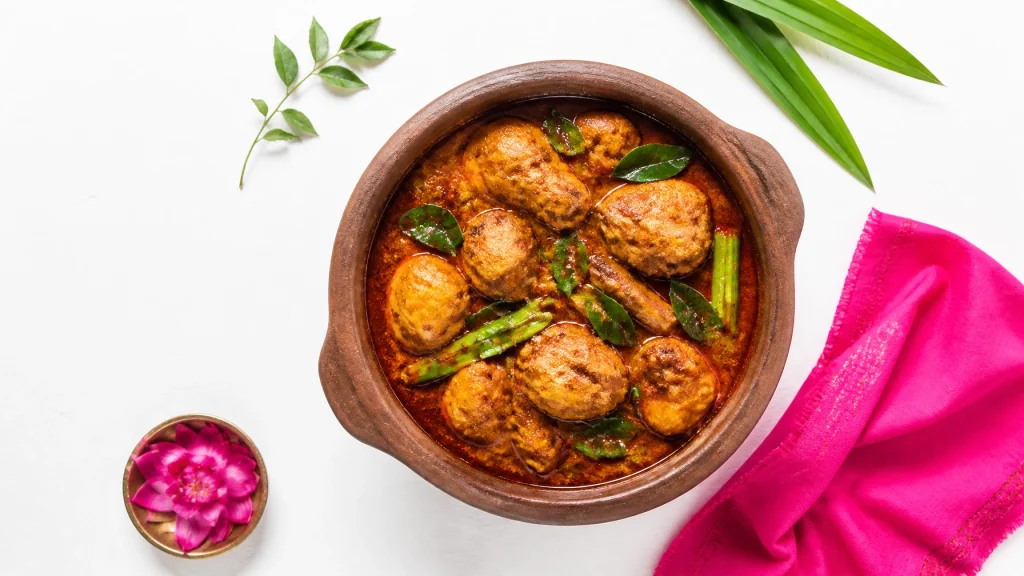
Hi there! If you’ve ever found yourself staring at a restaurant menu or a spice rack wondering why one chicken curry tastes like a warm hug and the other tastes like a tropical explosion, you’re not alone. While “chicken curry” is a global superstar, the way we make sri lankan chicken curry is worlds apart from its famous Indian cousins.
Are you ready to discover what makes our island’s version so uniquely delicious? Put on your apron (or just grab a snack), and let’s dive into the spicy details!
1. The Secret is in the Roast (Dark vs. Light)
The first thing you’ll notice about a Sri Lankan chicken curry is its color. It’s often a deep, dark, moody reddish-brown. Why? It all comes down to the roast.
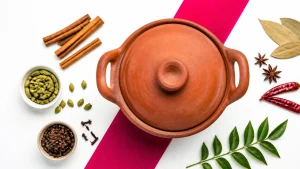
In most Indian cooking, spices like coriander, cumin, and turmeric are used “raw” or lightly toasted to keep their floral and bright notes. But in Sri Lanka, we like to turn up the heat before the cooking even begins. We take our coriander, cumin, and fennel seeds and roast them until they are dark and smoking. This creates a Roasted Curry Powder (Kalu Kudu) that is earthy, smoky, and incredibly complex.
Penny’s Pro Tip: If your kitchen doesn’t smell slightly like a campfire while you’re prepping, you might be making an Indian curry instead! (Both are delicious, but we’re biased toward the smoke.)

2. The Body: Coconut Milk vs. Dairy
If you’ve ever enjoyed a creamy Butter Chicken or a Tikka Masala, you’ve likely tasted the richness of heavy cream, yogurt, or butter (ghee). That’s a hallmark of North Indian cuisine.
In Sri Lanka, however, the coconut tree is our best friend. Almost every authentic sri lankan chicken curry relies on coconut milk for its signature texture. We often use two types:
- Thin coconut milk: Used early in the cooking process to simmer the chicken and infuse it with spices.
- Thick coconut milk: Added right at the end to create a silky, luscious gravy that clings to your rice.
The result? A curry that feels rich and creamy but stays dairy-free and “fresher” on the palate. It’s tropical luxury in a bowl!

3. The “Fragrant Trinity” of Aromatics
If you were to peek into a Sri Lankan kitchen, you’d see three ingredients that you won’t always find in a standard Indian recipe: Pandan leaves (Rampe), Lemongrass, and Curry Leaves (Karapincha).
While South Indian curries use curry leaves, we use them obsessively. But the real game-changer is the pandan leaf. It adds a subtle, nutty, popcorn-like aroma that defines the Sri Lankan food experience. Combine that with a bruised stalk of lemongrass, and you have a citrusy, herbal fragrance that makes our curry smell like a walk through a spice garden.

4. The “Tang” Factor: Goraka and Tamarind
Every great dish needs balance, and in curry, that usually means a bit of acid.
- Indian Style: Usually uses tomatoes, yogurt, or a squeeze of lemon to provide that tang.
- Sri Lankan Style: We reach for Goraka (Garcinia Cambogia) or tamarind.
Goraka is a dried, smoky fruit that looks like a shriveled black petal. It provides a sharp, fruity sourness that cuts right through the richness of the coconut milk. It’s the “secret ingredient” that gives our chicken curry its punchy, addictive edge.
5. See It in Action: Authentic Sri Lankan Chicken Curry
Want to see how these elements come together? Watching the process is the best way to learn the rhythm of Sri Lankan cooking. Check out this fantastic guide by Cooking With Ceylon Lover to see that beautiful roasted color for yourself:
(Note: Search YouTube for “Cooking With Ceylon Lover Sri Lankan Chicken Curry” for the full step-by-step tutorial!)
Which One Should You Cook?
The truth is, there’s no “better” curry: only the one you’re craving right now!
- Choose Indian if you want something buttery, mild, and tomato-forward.
- Choose Sri Lankan if you want something smoky, peppery, dairy-free, and packed with tropical aromatics.
If you’re ready to start your Sri Lankan culinary journey, we’ve got you covered. You can explore our full collection of authentic Sri Lankan recipes to find your new favorite weeknight meal.
Have fun in the kitchen, and don’t be afraid to get a little heavy-handed with those curry leaves!