Hi there! If you have ever visited a Sri Lankan bakery, birthday party, wedding, or evening tea table, you have probably met the beloved Sri Lankan fish cutlet.
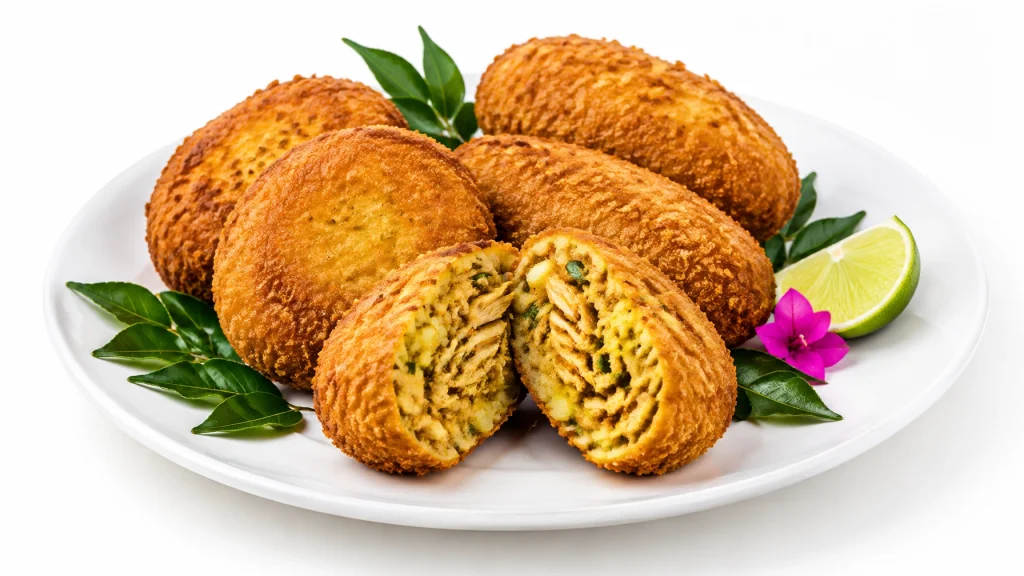
These crisp, golden short-eats are little breadcrumbed balls filled with mashed potato, tuna, onion, green chilli, curry leaves, and fragrant spices. The outside is crunchy. The inside is soft, savoury, spicy, and bright with lime. One is never enough (that is simply the rule).
This recipe uses canned tuna for convenience, but you can also use cooked, flaked fish. Make a batch for a party, freeze a few for later, or serve them hot with tea for the perfect Sri Lankan snack.
What Are Sri Lankan Fish Cutlets?
Sri Lankan fish cutlets, also called malu cutlets, are spiced fish-and-potato croquettes coated in breadcrumbs and deep-fried until golden. They are usually shaped into small balls or neat ovals.
They are a party staple because you can prepare them ahead of time, fry them in batches, and serve them warm or at room temperature. They also travel well, which makes them perfect for family gatherings, lunch boxes, and potluck tables.
The secret is simple: keep the filling fairly dry, shape the cutlets firmly, chill them before frying, and maintain the right oil temperature.
Ingredients
This recipe makes about 18–20 small fish cutlets.
For the filling
- 500 g potatoes, peeled and cut into chunks, shop the Grocery category
- 1 can tuna, about 350–400 g, well drained, shop the Grocery category
- 1 medium red onion, finely chopped, shop the Grocery category
- 2 green chillies, finely chopped
- 10–12 curry leaves, finely sliced, shop the Spices category
- 1 tablespoon finely grated ginger
- 2 garlic cloves, finely chopped
- ½ teaspoon turmeric, shop the Spices category
- 1 teaspoon chilli powder, or more to taste, shop the Spices category
- 1½ teaspoons roasted curry powder, try this roasted curry powder blend
- 1 tablespoon lime juice
- 1 teaspoon salt, plus more if needed
- 1 tablespoon cooking oil
For coating and frying
- 1 large egg, beaten, shop the Grocery category
- 1½–2 cups breadcrumbs, shop the Grocery category
- Neutral oil, enough for deep-frying, shop the Grocery category
Fish swap: You can replace canned tuna with about 350 g cooked fish. Steam or poach the fish, remove the bones and skin, then flake it finely before adding it to the filling.
How to Make Sri Lankan Fish Cutlets
1. Boil and mash the potatoes
Place the peeled potato chunks in a saucepan. Cover them with water and add a pinch of salt. Bring to a boil and cook until a fork slides through easily.
Drain the potatoes very well. Leave them uncovered for 5–10 minutes so excess steam can escape. This small step makes a big difference (watery potatoes are the sworn enemy of sturdy cutlets).
Mash the potatoes with a fork or potato masher. Keep the texture mostly smooth, but do not turn them into a completely wet purée.

2. Make the spicy fish filling
Heat the oil in a wide frying pan over medium heat. Add the red onion, green chilli, curry leaves, ginger, and garlic.
Cook for 4–6 minutes, stirring often, until the onion softens and the mixture looks fairly dry. Do not rush this stage. Cooking the onion properly removes excess moisture and builds a sweeter, deeper flavour.
Add the turmeric, chilli powder, roasted curry powder, and salt. Stir for about 30 seconds until fragrant.
Add the well-drained tuna. Break it up with your spoon and cook for 2–3 minutes. The fish should absorb the spices and become dry rather than saucy.
3. Combine and adjust the seasoning
Add the mashed potatoes to the pan. Mix until the potato and fish are evenly combined.
Remove the pan from the heat. Add the lime juice and taste the mixture. Adjust the salt, chilli, curry powder, or lime to suit you.
The filling should be firm enough to hold together when you press it in your hand. If it feels loose or sticky, return it to low heat for another minute or two to dry it out.
Spread the mixture on a plate or tray and let it cool completely.

4. Roll the filling into balls
Once the mixture is cool, scoop out about 2 tablespoons at a time. Roll each portion firmly between your palms.
Shape the cutlets into smooth balls or small ovals. Press gently but firmly so there are no cracks or loose edges. If you see a piece of onion or curry leaf poking out, tuck it back into the filling.
Place the shaped cutlets on a plate or tray. Try to make them a similar size so they fry evenly.
5. Dip in egg and coat in breadcrumbs
Set up a simple coating station with the beaten egg in one shallow bowl and the breadcrumbs in another.
Dip each cutlet into the egg. Turn it so the entire surface is lightly coated, then let the excess egg drip away.
Roll the cutlet in breadcrumbs, pressing gently so the crumbs adhere all over. For a thicker crust, repeat the egg and breadcrumb coating a second time.

6. Chill to set
Arrange the coated cutlets on a tray without touching each other. Refrigerate them for at least 30 minutes, or up to 24 hours.
Chilling firms the filling and helps the coating set. It also gives you a useful pause before the exciting bit: frying.
7. Deep-fry until golden
Heat the oil to 175–180°C (350–355°F). If you do not have a thermometer, drop in a few breadcrumbs. They should sizzle immediately and rise gently to the surface without burning.
Fry the cutlets in small batches. Do not overcrowd the pan, or the oil temperature will drop and the cutlets may become greasy.
Cook for about 3–4 minutes, turning gently, until deeply golden and crisp on all sides. Remove with a slotted spoon and drain on a wire rack or paper towel.
Serve while warm. That first crunchy bite is the whole point!
Tips for Cutlets That Do Not Crack
- Drain everything well. Drain the tuna thoroughly and allow the boiled potatoes to steam dry.
- Cook the onion until dry. Soft is good, but wet is not. Keep cooking until there is no visible liquid in the pan.
- Cool the filling completely. Warm filling can soften the egg and breadcrumb coating.
- Shape firmly. Press the mixture together and smooth the surface before coating.
- Cover every gap. Bare patches can split when steam escapes during frying.
- Chill before frying. A cold, firm cutlet is much less likely to collapse.
- Use enough oil. The cutlets should be mostly submerged so they cook evenly.
- Fry in small batches. Give the oil room to stay hot and let you turn the cutlets gently.
- Avoid constant stirring. Leave them alone for the first minute, then roll them carefully.
Troubleshooting
Why are my cutlets breaking apart?
The filling may be too wet, the cutlets may not be packed firmly enough, or the oil may be too cool. Cook the filling a little longer, chill the shaped cutlets, and check that the oil reaches 175–180°C before frying.
Why is the filling soggy?
The potatoes may have absorbed too much water, or the onion and tuna were not drained properly. Spread the mixture in a wide pan and cook it over medium heat until it becomes firm and dry.
Why is the crumb coating falling off?
Make sure the cutlets are completely cool and dry before coating. Coat the entire surface with egg, then press the breadcrumbs on gently. Chilling the coated cutlets helps the crumbs stay put.
Why do my cutlets taste bland?
Potatoes need generous seasoning. Taste the filling before shaping and adjust the salt, roasted curry powder, chilli, pepper, and lime. The filling should taste slightly stronger than you expect because the breadcrumbs soften the flavour.
Make-Ahead and Freezing Tips
You can prepare the filling up to 2 days ahead. Store it in an airtight container in the refrigerator.
You can also shape, coat, and chill the uncooked cutlets for up to 24 hours. Keep them covered so the surface does not dry out too much.
To freeze them, arrange the crumb-coated uncooked cutlets on a tray and freeze until firm. Transfer them to a freezer-safe bag or container, placing baking paper between layers. Freeze for up to 2 months.
Fry the cutlets directly from frozen. Use slightly lower heat at first so the centre warms through before the outside becomes too dark. Add a little extra cooking time and fry in small batches.
What to Serve with Fish Cutlets
Serve these golden bites with tomato ketchup, sweet chilli sauce, or a sharp onion sambol. They are also excellent alongside a cup of hot Ceylon tea.
For a full short-eats platter, pair them with our Sri Lankan Chinese Fish Rolls and spicy Isso Vade, Sri Lankan prawn vade. Add lime wedges and a little sambol, and your snack table is ready for action.
Watch the Recipe
For a visual guide to shaping, coating, and frying Sri Lankan fish cutlets, watch this helpful recipe video:
Make a batch, invite your favourite people, and keep an eye on the platter. These cutlets have a habit of disappearing before everyone sits down. Have fun!