Hi there! If you love traditional Sri Lankan dishes with deep caramel notes, warm spices and plenty of texture, this bibikkan recipe belongs on your festive table.
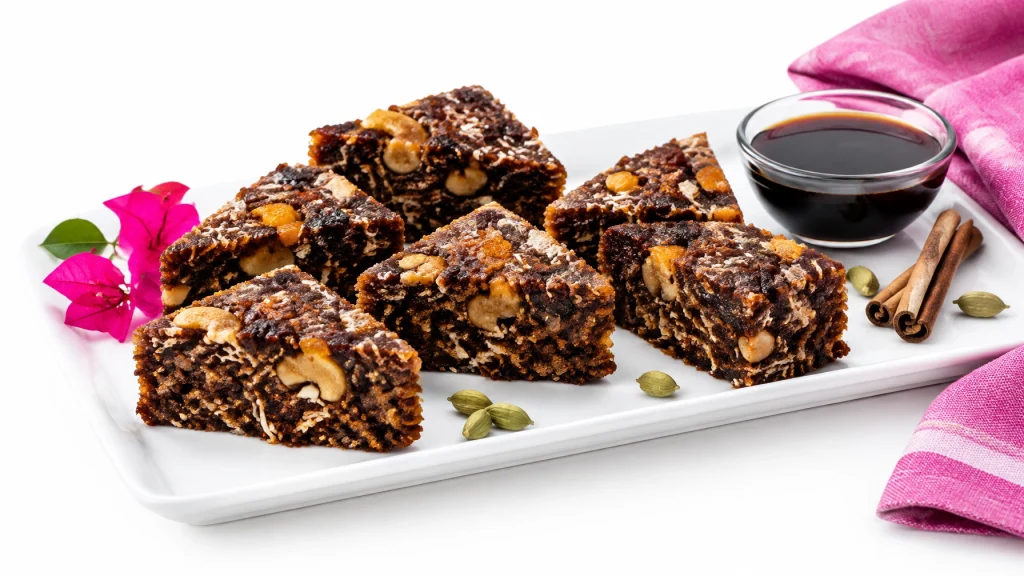
Bibikkan is a dark, dense Sri Lankan coconut cake made with grated coconut, kithul treacle, semolina, dried fruit and nuts. It is not a light sponge (and that is exactly the point). Each slice is rich, chewy and fragrant, with little treasures of cashew, date and candied peel tucked into the crumb.
During Christmas and other celebrations, bibikkan often sits beside Sri Lankan favourites such as love cake and rich cake. It is also a wonderful addition to a tea table, especially when served with a strong cup of Ceylon tea. Ready to bake something special? Let’s get started.
What makes bibikkan special?
The secret is the combination of kithul treacle and coconut. Kithul treacle is made from the sap of the fishtail palm and has a dark, earthy sweetness. It gives bibikkan its signature colour and flavour.
Roasted semolina adds body. Dates and candied peel bring sweetness and chew. Cashews add a little crunch. Cardamom, cinnamon, nutmeg and ginger keep every bite warm and aromatic.
Think of it as a festive fruit cake’s tropical Sri Lankan cousin (with a wonderfully sticky personality).
Bibikkan ingredients
This recipe makes one 20 cm (8-inch) square cake, or approximately 20–24 small diamond-shaped pieces.
Dry ingredients
- 150 g semolina
- 100 g plain flour
- 1 teaspoon baking powder
- ½ teaspoon salt
- 1 teaspoon ground cardamom
- 1 teaspoon ground cinnamon
- ½ teaspoon ground nutmeg
- ½ teaspoon ground ginger
Coconut and treacle mixture
- 300 g finely grated coconut
- 300 ml kithul treacle
- 100 g unsalted butter
- 2 large eggs, lightly beaten
- 1 tablespoon rosewater
Fruit and nuts
- 100 g chopped dates
- 80 g chopped cashews
- 80 g finely chopped candied peel or preserved pumpkin, sometimes called pumpkin preserve
- Extra butter or oil for greasing the tin
Ingredient note: Fresh coconut gives bibikkan its moist, rich texture. If you use desiccated coconut, choose unsweetened coconut and rehydrate it with a few tablespoons of warm water before mixing.
Step-by-step bibikkan recipe
1. Prepare the tin and oven
Preheat your oven to 160°C (320°F).
Line the base and sides of a 20 cm square baking tin with baking paper. Leave a little paper overhanging the sides so you can lift the cooled cake out easily. Grease the paper lightly.
Bibikkan bakes slowly, so a lined tin protects the edges and helps the centre cook evenly.
2. Dry-roast the semolina

Place the semolina in a dry frying pan over medium-low heat. Stir continuously for 5–7 minutes, until it smells nutty and turns lightly golden.
Do not rush this step. Burnt semolina will taste bitter, while pale, gently roasted semolina gives the cake a lovely toasted flavour.
Transfer it to a bowl and leave it to cool for a few minutes.
3. Mix the dry ingredients
Add the plain flour, baking powder, salt, cardamom, cinnamon, nutmeg and ginger to the roasted semolina.
Whisk everything together until the spices are evenly distributed. This prevents little pockets of baking powder or spice from hiding in the finished cake (the sort of surprise nobody ordered).
Stir in the chopped dates, cashews and candied peel.
4. Warm the treacle and butter
Place the kithul treacle and butter in a heavy saucepan. Warm over low heat, stirring until the butter melts and the mixture becomes smooth.
Do not bring it to a fierce boil. You only need gentle heat. Boiling the treacle too hard can make the finished cake taste harsh or bitter.
Remove the saucepan from the heat and let the mixture cool until warm rather than hot.
5. Combine the wet and dry mixtures
Pour the warm treacle mixture into the bowl of dry ingredients. Add the grated coconut and rosewater.
Stir with a sturdy wooden spoon until everything is combined. The mixture should be thick, sticky and spoonable. It will not look like a pourable sponge-cake batter.
Add the beaten eggs and mix until fully incorporated. Scrape the bottom and sides of the bowl as you work so the semolina and fruit distribute evenly.
6. Fill the tin
Spoon the mixture into the lined square tin. Press it into the corners and smooth the top with the back of a spoon or a lightly greased spatula.
Tap the tin gently on the work surface once or twice to remove large air pockets. Do not flatten it aggressively; bibikkan should stay dense and moist.
7. Bake low and slow
Bake for 60–75 minutes, or until the top is deep brown and a skewer inserted into the centre comes out with a few moist crumbs.
If the top darkens too quickly, cover it loosely with foil for the final 20 minutes. The centre should feel set but still slightly soft. Remember, the cake firms as it cools.

Leave the cake to cool completely in the tin. For the cleanest slices, rest it for several hours or overnight before cutting it into diamonds.
Tips for a dark, moist bibikkan
- Use real kithul treacle. It gives the deepest colour and most distinctive flavour.
- Choose finely grated coconut. Large shreds can make the cake harder to slice.
- Roast the semolina gently. Golden and fragrant is perfect; dark brown and smoky is too far.
- Keep the oven temperature low. A slow bake protects the moisture inside.
- Do not overmix after adding the eggs. Stir just until combined.
- Cool before cutting. Warm bibikkan can seem crumbly, even when the texture is perfect.
- Rest the cake overnight. The treacle and spices deepen as the cake matures.
Troubleshooting your bibikkan
My bibikkan is dry
It probably baked for too long, or the oven was too hot. Next time, check it 10 minutes earlier and cover the top if it is browning quickly. Make sure you measure the coconut and treacle accurately; both provide important moisture.
The centre sank
A sinking centre usually means the batter contained too much liquid or the cake was removed before the middle had set. Avoid opening the oven during the first 45 minutes. Bake until the centre is firm and the skewer shows moist crumbs rather than wet batter.
The treacle tastes bitter
The treacle may have been overheated, or the product itself may be overly dark and concentrated. Warm it gently with the butter rather than boiling it. A good-quality kithul treacle should taste rich and caramel-like, not burnt.
The slices are crumbly
Bibikkan needs time to cool and settle. Chill it briefly or rest it overnight before slicing. Use a sharp knife and wipe the blade between cuts. If the cake is still crumbly, it may have been slightly overbaked.
How to store bibikkan
Once completely cool, wrap the cake tightly in baking paper or foil and place it in an airtight container.
It will keep at room temperature for up to 5 days. For longer storage, refrigerate it for up to 2 weeks. Bring the pieces to room temperature before serving so the texture softens again.
You can also freeze bibikkan for up to 2 months. Wrap individual diamonds well, thaw them overnight in the refrigerator, then bring them to room temperature before serving.
How to serve bibikkan
Serve bibikkan in small diamond-shaped pieces with a hot cup of Ceylon tea. The tea’s gentle astringency balances the treacle’s sweetness beautifully.
For a festive Sri Lankan sweets platter, serve it with Konda Kavum, crispy kokis or traditional milk toffee. You can also browse our Desserts & Sweets collection for more ideas, including Sri Lankan favourites such as love cake and milk toffee.

Watch the bibikkan method
Want to see the coconut, kithul treacle and spice mixture come together?
before you begin.
There you have it: a deeply flavoured, festive bibikkan recipe that brings together coconut, treacle, fruit, nuts and spice in every rich slice. Make it ahead, let it mature and share it generously.
Have fun baking!