Hi there! If you are building an Avurudu table, make room for aluwa. These neat diamond-shaped sweets bring together roasted rice flour, fragrant kithul treacle, cashews and warm spices in one wonderfully old-fashioned bite.
In Sri Lanka, aluwa sits proudly beside kavum, kokis, athirasa and other festive treats during the Sinhala and Tamil New Year. It is firm enough to hold in your fingers, tender enough to bite easily, and beautifully scented with cardamom and nutmeg.
This aluwa recipe uses kithul treacle for a deep caramel flavour. You will cook the syrup to the right thread consistency, stir in the roasted flour, press the mixture while warm and cut it into diamonds. The syrup stage is the key. Get that right, and the rest is pleasantly straightforward.
What Is Aluwa?
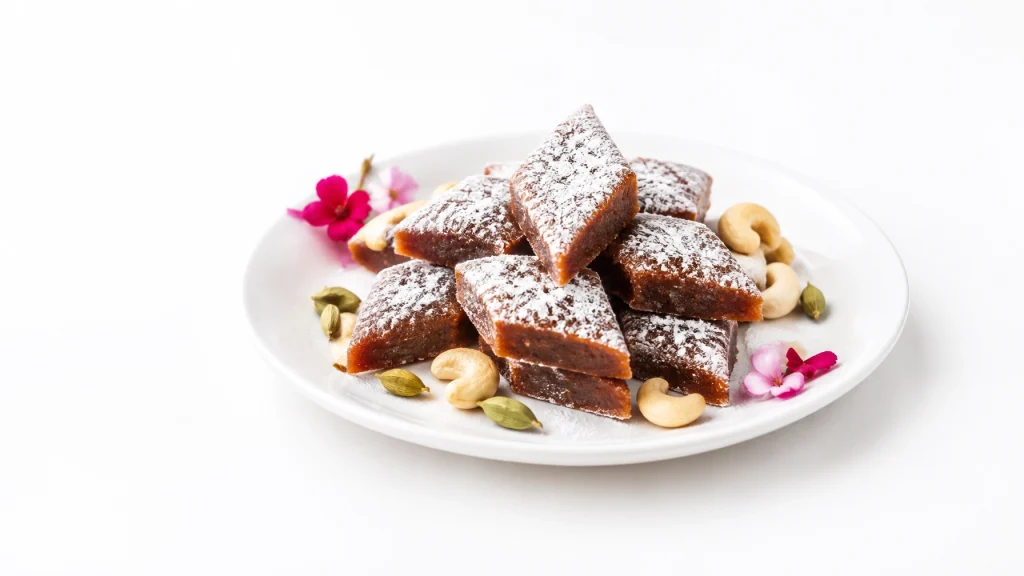
Aluwa is a traditional Sri Lankan sweet made by combining roasted rice flour with a thick sugar or treacle syrup. Cashews and spices add texture and fragrance. The warm mixture is pressed into a tray, cut into diamond shapes and finished with icing sugar.
Think of it as a Sri Lankan rice-flour fudge (but with more personality and a very good cup of tea on the side).
You can serve aluwa as part of a festive platter or alongside other traditional Sri Lankan dishes. For more Avurudu inspiration, try our recipes for Kavum and Watalappan.
Ingredients
This recipe makes approximately 24–30 small diamonds.
- 2 cups (250 g) roasted rice flour, find it through the Grocery category
- 1 cup (240 ml) kithul treacle, shop the Grocery category
- ¼ cup (50 g) white sugar: available in Groceries
- 2 tablespoons ghee or unsalted butter
- ½ cup chopped cashews: browse Grocery
- ½ teaspoon ground cardamom, from the Spices category
- ¼ teaspoon freshly grated nutmeg, from the Spices category
- A pinch of salt
- ½ cup icing sugar, for coating
- 1 teaspoon ghee or butter, for greasing the tray
You may need 1–2 tablespoons of hot water only if your treacle is unusually thick. Start without it. Too much water means a longer cooking time and a softer set.
Before You Start
Aluwa waits for nobody once the flour meets the syrup. Prepare everything first:
- Grease a shallow tray measuring approximately 20 cm by 20 cm.
- Line the tray with baking paper if you like, leaving a little overhang.
- Keep your spatula, knife and serving tray nearby.
- Roast the rice flour if it is not already roasted.
- Chop the cashews and measure the spices.
A little organisation now saves you from racing around the kitchen with sticky hands later (we have all been there).
Step 1: Roast the Rice Flour
Place the rice flour in a dry, heavy-based pan over low to medium-low heat. Stir continuously for 8–12 minutes.
The flour should become lightly fragrant and just a shade warmer in colour. Do not brown it. Burnt flour will make the aluwa taste bitter, and there is no polite way to blame that on the treacle.
Remove the flour from the heat and let it cool slightly. If your flour is already labelled roasted rice flour, warm it gently for a few minutes to refresh its aroma.

Step 2: Prepare the Kithul Treacle Syrup
Add the kithul treacle and white sugar to a clean saucepan. Warm over medium heat, stirring until the sugar dissolves.
Bring the mixture to a gentle boil. Lower the heat slightly and cook until the syrup thickens. Avoid vigorous stirring once it starts bubbling, as this can encourage crystallisation.
Add the cardamom, nutmeg and salt. Stir gently.
The All-Important Syrup Test
Your syrup must reach a thick thread consistency before you add the flour. This is what helps the aluwa set firmly without becoming rock-hard.
Use one or both of these tests:
- Spoon test: Lift a spoonful of syrup and let it fall back into the pan. It should flow in one thick, continuous thread rather than separate drops.
- Cold-water test: Drop a little syrup into a cup of cold water. It should gather into a soft, pliable strand or small soft ball. It should not dissolve immediately, and it should not become a hard brittle lump.
If you use a thermometer, aim for approximately 112–115°C. Treacle brands vary, so use the texture tests as your final guide.

Penny’s tip: Test the syrup twice if you are unsure. A few extra seconds can make the difference between aluwa that cuts beautifully and aluwa that refuses to set.
Step 3: Add the Ghee, Nuts and Flour
Once the syrup reaches the correct stage, reduce the heat to low. Stir in the ghee or butter, followed by the chopped cashews.
Add the roasted rice flour gradually, about ½ cup at a time. Stir continuously with a strong wooden spoon or spatula.
The mixture will become thick quickly. Keep mixing until it forms a smooth, heavy mass that pulls away from the sides of the saucepan. It should look like a soft dough rather than a pourable batter.
Do not leave the pan unattended at this stage. Aluwa changes texture fast.
If the mixture becomes stiff before all the flour is incorporated, add a teaspoon of hot treacle or hot water. Add very little at a time. You can soften a mixture, but rescuing an overly wet one is much harder.
Step 4: Press the Aluwa Into the Tray
Immediately transfer the hot mixture to your greased tray.

Grease the back of a spatula, a flat-bottomed glass or a rolling pin. Press the mixture evenly to a thickness of about 1–1½ cm.
Work while the aluwa is warm. Once it cools, it becomes firm and difficult to flatten.
Smooth the top gently. You want an even slab so every diamond gets the same tender texture (and so the pieces look wonderfully tidy on the Avurudu table).
Step 5: Cut and Coat the Diamonds
While the aluwa is still warm but no longer piping hot, use a lightly greased sharp knife to score it into strips. Cut across the strips on a diagonal to create diamond shapes.
Leave the aluwa in the tray until completely cool. Then separate the pieces carefully.
Place the icing sugar in a shallow bowl and roll each diamond lightly in it. Shake off the excess. The coating should look delicate, not like a snowstorm.

Tips for Aluwa That Sets Firm but Not Rock-Hard
- Cook the syrup fully. Undercooked syrup is the most common reason aluwa stays soft.
- Do not overcook the syrup. A hard-ball syrup creates dry, brittle aluwa.
- Add flour gradually. You may not need every last spoonful if your flour absorbs liquid differently.
- Press the mixture while warm. Cold aluwa cracks instead of spreading smoothly.
- Use ghee sparingly. It adds richness and helps with texture, but too much can make the pieces greasy.
- Cool completely before storing. Warm aluwa can create condensation inside a container.
Troubleshooting
My aluwa will not set
The syrup probably did not reach thread consistency. Return the mixture to a saucepan with a tablespoon or two of hot treacle and warm it gently. Stir until it thickens, then press it into the tray again.
If the aluwa is already cut, you can crumble it, reheat it carefully and reshape it. It may not look quite as perfect, but it can still taste delicious.
My aluwa is crumbly
You may have added too much flour or cooked the syrup too far. Add a small amount of warm treacle or melted ghee and work the mixture again while warm.
Next time, reserve a little flour rather than adding it all automatically.
My aluwa is too soft
Give the syrup more time. Kithul treacle contains natural moisture, so it may need a little longer than a plain sugar syrup. Use the cold-water test instead of relying only on cooking time.
The texture is grainy
The sugar may have crystallised, or the rice flour may not have been roasted evenly. Cook the syrup gently and avoid scraping crystallised sugar from the sides of the pan back into the mixture.
Sifting the roasted flour before using it also helps create smoother aluwa.
Storage and Serving
Store completely cooled aluwa in an airtight container at room temperature for up to one week. Separate layers with baking paper if the icing sugar becomes sticky.
Keep the container away from direct sunlight and humidity. Refrigeration is not usually necessary and can make the texture firmer than you want.
Serve aluwa with Ceylon tea, coffee or a selection of Avurudu sweets. The flavour often deepens after a day, once the kithul treacle and spices have settled into the roasted flour.
Watch the Method
Want to see the traditional shaping and syrup technique before you begin? This visual guide is useful for watching the texture develop:
Now gather your roasted rice flour, kithul treacle and spices, and give this classic sweet a go. Whether you are recreating an Avurudu memory or discovering Sri Lankan recipes for the first time, homemade aluwa is a lovely place to start.
Have fun, work quickly and keep an eye on that syrup!