Hi there! If you love a breakfast with crispy edges, a tender centre, and a little bit of drama, you are going to adore Sri Lankan egg hoppers, also known as biththara appa.
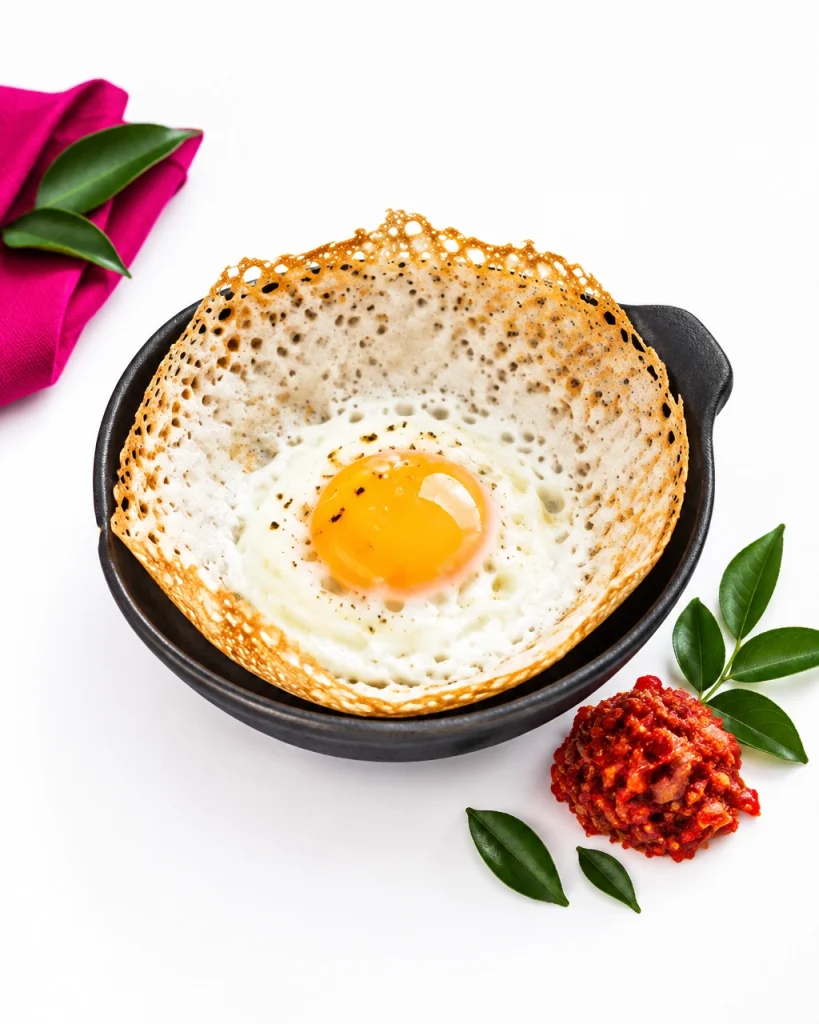
These bowl-shaped fermented rice flour crepes are a much-loved Sri Lankan breakfast and dinner favourite. The batter climbs the sides of a hot, rounded hopper pan, creating a delicate, lacy edge. Then an egg cooks right in the centre (like a sunny little surprise).
Plain hoppers contain only the fermented rice and coconut batter. Egg hoppers take things one delicious step further by adding an egg to the soft centre. The result? Crisp edges, a fluffy middle, and a soft yolk ready to mingle with fiery lunu miris or sweet-spicy seeni sambol.
This Sri Lankan egg hopper recipe takes a little patience because the batter needs to ferment overnight. The actual cooking is quick, though. Once your pan is hot, breakfast comes together in minutes.
Sri Lankan Egg Hopper Recipe at a Glance
- Makes: 8 egg hoppers
- Prep time: 20 minutes
- Fermentation time: 6–12 hours
- Cooking time: 3–4 minutes per hopper
- Best pan: A non-stick or well-seasoned hopper pan
- Difficulty: Beginner-friendly, with a little swirling practice
Ingredients
For the fermented hopper batter:
- 2 cups fine rice flour
- 1½ cups coconut milk
- 1 to 1¼ cups warm water, as needed
- 1 teaspoon instant or active dry yeast
- 1 to 2 teaspoons sugar
- ¾ teaspoon salt, added after fermentation
- 8 fresh eggs
- Neutral oil or coconut oil, for seasoning the pan
- A pinch of black pepper, optional
You can find pantry basics such as rice flour, yeast, sugar, salt, and eggs through the Sri Lanka Stores Grocery collection. For coconut milk and other coconut-based ingredients, browse the Coconut Products category.
Penny’s tip: Use full-fat coconut milk for a richer flavour and softer centre. If your coconut milk is very thick, dilute it with a little warm water before mixing.

Step 1: Mix the Hopper Batter
If you are using active dry yeast, place it in a small bowl with ¼ cup of the warm water and a pinch of sugar. Leave it for 5 to 10 minutes. It should become lightly foamy.
Using instant yeast? You can add it directly to the flour.
Place the rice flour and sugar in a large mixing bowl. Add the yeast mixture, coconut milk, and enough warm water to create a smooth, pourable batter. Whisk thoroughly to remove lumps.
The batter should be thinner than ordinary pancake batter. It should flow easily from a ladle and lightly coat the back of a spoon.
Cover the bowl with a lid, reusable cover, or clean damp cloth.
Step 2: Ferment the Batter Overnight
Leave the covered batter in a warm, draft-free place for 6 to 12 hours. Overnight fermentation is ideal, especially if you want egg hoppers for breakfast.
When ready, the batter should look slightly risen and bubbly. It may smell gently yeasty or tangy, but it should not smell sharply sour.
Stir in the salt just before cooking. If the batter has thickened overnight, add a splash of warm water and whisk gently until it returns to a smooth, pourable consistency.
Fermentation gives hoppers their light texture and subtle flavour. Skip this step, and you may end up with a flat, heavy crepe (still edible, but not quite the appa of your dreams).
Step 3: Heat and Season the Hopper Pan
Place your hopper pan over medium-high heat. A small rounded non-stick pan or wok can also work.
Let the pan heat properly. Add a few drops of oil and carefully wipe the oil around the base and sides with a paper towel or clean cloth. You want a thin coating, not a puddle.
A hot pan helps the batter set quickly against the sides. That is how you get the signature crisp, lacy edge.
If you are using a new or stubborn pan, season it several times before making the batter. The first hopper may still be your “practice hopper” (every cook has one).
Step 4: Swirl the Batter into a Bowl
Pour approximately ¼ to ⅓ cup of batter into the centre of the hot pan.
Immediately lift the pan and swirl it in one smooth, confident circular motion. Tilt the pan so the batter climbs the sides, leaving a slightly thicker layer in the centre.
You are aiming for:
- Thin, crisp batter around the edges
- A soft, slightly thicker centre
- An even bowl shape
- No large gaps in the sides
Do not swirl repeatedly. One quick motion usually gives the best result. If the batter feels slow or heavy, thin it with a tablespoon of warm water.

Step 5: Add the Egg
Crack one egg into the centre of the batter. Try to keep the yolk whole and centred.
Season the egg with a tiny pinch of salt and black pepper, if you like.
Place the lid on the pan. The trapped steam cooks the egg white gently while helping the hopper centre set.
Cook for 2 to 3 minutes, or until the egg white is cooked and the yolk is still soft. For a firmer yolk, leave the lid on for another 30 to 60 seconds.
The edges should look golden, dry, and crisp. Carefully loosen the hopper with a thin spatula and slide it onto a plate.
Repeat with the remaining batter and eggs, lightly wiping the pan with oil between batches if needed.
How to Get Crisp Edges and a Runny Yolk
A few small details make a big difference:
- Preheat the pan properly. If the pan is cool, the batter will slide back into the centre instead of clinging to the sides.
- Keep the batter thin. Thick batter creates bready, chewy edges rather than delicate lace.
- Swirl immediately. The batter needs to reach the sides while the pan is hot.
- Use moderate heat after adding the egg. High heat may burn the edges before the white sets.
- Keep the lid on. Steam cooks the egg white from above without forcing you to overcook the yolk.
- Serve straight away. Egg hoppers are at their crispest when they come directly from the pan.
Troubleshooting Your Egg Hoppers
The batter is not fermenting
Your yeast may be old, the room may be too cold, or the water may have been too hot and damaged the yeast.
Place the covered bowl somewhere warm, such as inside an unheated oven with the light on. If there are still no bubbles after several hours, test fresh yeast before continuing.
For more detailed fixes, read our guide to crispy, lacy Sri Lankan hoppers and seven common mistakes.
The egg is sticking
The pan may need better seasoning, or it may not be hot enough. Heat the pan thoroughly, then wipe it with a very thin layer of oil.
Avoid moving the hopper too early. Let the edges set and release naturally before loosening them.
The centre is soggy
Cover the pan for longer and reduce the heat slightly. A soggy centre can also mean the batter is too thick or you added too much batter to the pan.
Use a smaller ladleful and aim for a thin coating around the sides.
The batter is too thick
Whisk in warm water one tablespoon at a time. The batter should flow smoothly and spread quickly when you tilt the pan.
If it runs straight back to the centre and will not cling to the sides, you have gone too far. Add a little rice flour and let the batter rest for 10 minutes before trying again.
What to Serve with Sri Lankan Egg Hoppers
Serve egg hoppers hot, while the edges are still wonderfully crisp.
For a classic pairing, add a spoonful of fiery lunu miris, made with chilli, onion, lime, and Maldive fish. Seeni sambol brings a sweet caramelised onion flavour that works beautifully with the creamy egg yolk.
You can also serve your hoppers with:
- Coconut pol sambol
- Sri Lankan chicken or fish curry
- Creamy kiri hodi
- Dhal curry
- Fresh cucumber and tomato salad
- A cup of strong Ceylon tea
If you enjoy Sri Lankan rice-based breakfasts, try this traditional kiribath recipe with lunu miris too. It is a different texture, but the spicy sambol pairing is just as delightful.
Watch the Hopper Technique
Swirling the pan is the only part that may feel unfamiliar at first.
Then practise. Your first hopper may look a little wonky. That is completely normal. By the third one, you will be swirling like you have been running a breakfast stall in Colombo.

Final Thoughts
This Sri Lankan egg hopper recipe rewards patience with a truly special breakfast. Ferment the batter overnight, heat your pan well, swirl quickly, and let steam do the gentle work.
Once you master the technique, you can make plain hoppers, egg hoppers, or even experiment with different toppings. Start with lunu miris, keep the yolk soft, and enjoy every crisp, coconut-rich bite.
Have fun cooking, and happy swirling!