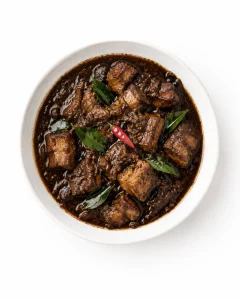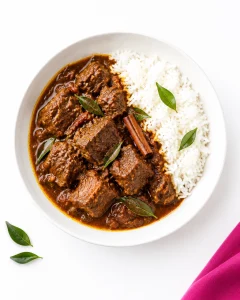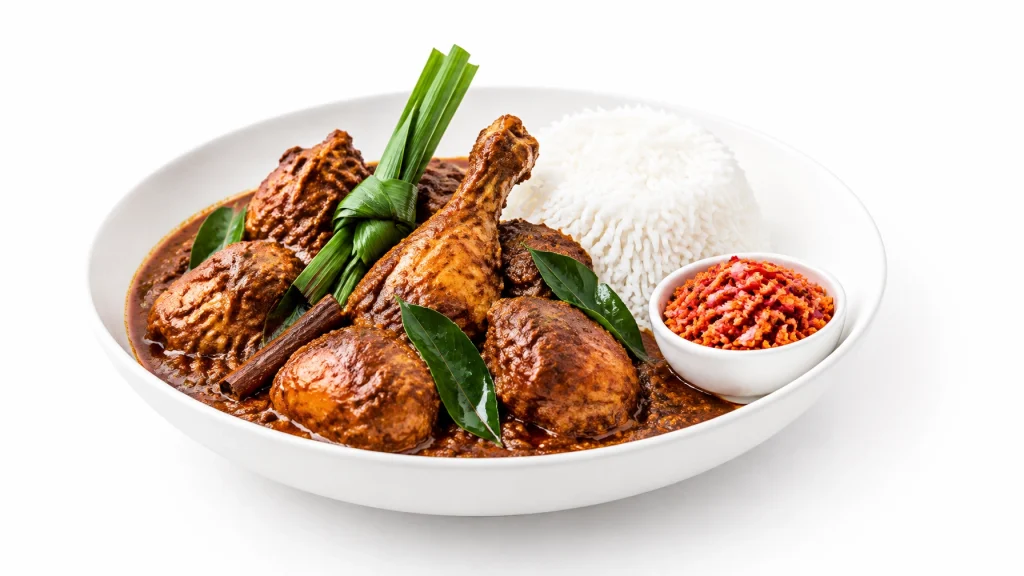
Hi there! Ready to make a pot of deeply aromatic Sri Lankan chicken curry? This coconut-rich classic brings together roasted curry powder, curry leaves, pandan (rampe), Ceylon cinnamon, cardamom, and a rich onion-tomato tempering.
You’ll cook it in two stages. First, you build the dark roasted spice base. Then, you simmer the chicken gently in coconut milk until the gravy turns thick, glossy, and wonderfully spoonable (the rice will thank you).
Sri Lankan Chicken Curry at a Glance
- Serves: 4–6
- Prep time: 20 minutes, plus marinating
- Cook time: 45–55 minutes
- Best chicken: Bone-in thighs and drumsticks
- Heat level: Medium, adjustable
- Style: Thick and dark rice-and-curry table curry
Ingredients
For the chicken
- 1 kg bone-in chicken thighs and drumsticks, skin removed
- 1½ tablespoons Sri Lankan roasted curry powder
- 1 teaspoon turmeric powder
- 1–2 teaspoons Sri Lankan chili powder, to taste
- 1½ teaspoons salt
- 1 tablespoon lime juice or vinegar (optional)
For the tempering
- 3 tablespoons coconut oil or neutral oil
- 1 teaspoon mustard seeds
- ½ teaspoon fenugreek seeds
- 1 Ceylon cinnamon quill
- 4 green cardamom pods, lightly crushed
- 1 sprig curry leaves
- 1 piece pandan leaf (rampe), about 10 cm, knotted
- 1 large onion, thinly sliced
- 4 garlic cloves, finely chopped
- 2 cm fresh ginger, grated
- 2 green chilies, slit lengthwise
- 1 medium tomato, chopped
For the coconut gravy
- 1 can, about 400 ml, full-fat Sri Lankan coconut milk
- ½ cup water, as needed
- ½ teaspoon black pepper
- Extra salt, to taste
You can find everyday pantry ingredients in the Sri Lanka Stores Grocery collection, and browse more curry essentials in the Spices collection and Coconut Products collection.

How to Make Sri Lankan Chicken Curry
1. Marinate the chicken
Place the chicken in a large bowl. Add the roasted curry powder, turmeric, chili powder, salt, and lime juice or vinegar, if using.
Rub everything into the chicken so each piece is well coated. Marinate for at least 30 minutes. If you have time, cover and refrigerate it for up to 4 hours.
Helpful tip: Bone-in chicken gives your gravy more flavor and keeps the meat juicy while it simmers.
2. Prepare the coconut milk
Open the coconut milk without shaking the can. If the thick cream has separated, spoon about ½ cup into a small bowl and set it aside.
Mix the remaining coconut milk with ½ cup water. This becomes your thinner coconut milk for the first simmer.
If your coconut milk is already smooth and blended, simply measure out 1¼ cups for the simmer and reserve the rest for finishing.
3. Build the aromatic tempering
Heat the oil in a heavy-bottomed pot over medium heat.
Add the mustard seeds. When they begin to pop, add the fenugreek seeds, cinnamon, cardamom, curry leaves, and pandan leaf. Let everything sizzle for 30–45 seconds.
Add the sliced onion and a small pinch of salt. Cook for 6–8 minutes, stirring often, until the onion softens and begins to turn golden.
Add the ginger, garlic, and green chilies. Cook for another 1–2 minutes. Your kitchen should now smell like a very promising rice-and-curry table.

4. Roast the spice base
Reduce the heat to low. Add the chopped tomato, the remaining roasted curry powder, and black pepper.
Stir continuously for 1–2 minutes. The spices should darken slightly and become fragrant, but they should not burn.
This is the first important stage of the recipe: the roasted spices bloom in the seasoned oil and combine with the onion-tomato base. That deep, earthy flavor is what makes Sri Lankan chicken curry taste different from a lighter curry.
5. Add and coat the chicken
Add the marinated chicken to the pot. Turn the pieces through the spice mixture until every piece is coated.
Cook uncovered for 5–7 minutes. Turn the chicken occasionally until the outside changes color and the marinade begins to cling to the onions and spices.
Don’t worry if the pot looks quite dry at this point. The coconut milk is coming to the rescue.
6. Simmer the chicken in coconut milk
Pour in the thin coconut milk mixture. It should come about halfway up the chicken. Add a little extra water only if needed.
Bring the curry to a gentle simmer. Reduce the heat to low, cover the pot, and cook for 25–35 minutes.
Stir every 8–10 minutes. Scrape the bottom gently so the roasted spices do not catch.
The chicken is ready for the next stage when it is tender and cooked through. If you use a thermometer, the thickest part should reach 74°C (165°F).
7. Finish with thick coconut milk
Remove the lid. If the gravy looks very loose, simmer uncovered for 5–8 minutes before adding the thick coconut milk.
Stir in the reserved coconut cream or thick coconut milk. Keep the heat low and simmer uncovered for another 5–7 minutes.
The gravy should now be rich, dark, and glossy. A little golden oil around the edges is a good sign. It means the curry has developed the finish you often see at a Sri Lankan rice-and-curry table.
Taste and adjust the salt and chili. Remove the cinnamon stick and pandan leaf before serving, or leave them in the pot for a rustic look.

Watch the Curry Technique
Want to see a similar traditional cooking method in action? This video includes roasted curry powder, coconut milk, curry leaves, pandan, cinnamon, and cardamom:
Pay attention to the order: temper the aromatics, bloom the spices, coat the chicken, then simmer gently. That sequence does the heavy lifting.
How to Make the Curry Thick and Dark
For the classic thick, dark version served with rice and curry, follow these simple tricks:
- Use bone-in chicken instead of boneless breast.
- Choose roasted curry powder, not mild generic curry powder.
- Cook the onion until lightly golden before adding the tomato.
- Use just enough thin coconut milk to simmer the chicken.
- Reduce the gravy uncovered before adding the thick coconut milk.
- Simmer gently after adding coconut cream. Do not boil it aggressively.
- Let the curry rest, covered, for 10 minutes before serving.
That short rest matters. The gravy settles, the chicken absorbs more flavor, and the whole pot becomes even more delicious.
Troubleshooting
The curry is too thin
Remove the lid and simmer the curry over low to medium-low heat for 5–10 minutes. Stir occasionally.
Next time, add less water at the beginning and reduce the gravy before adding the thick coconut milk.
The curry is too spicy
Stir in a little extra coconut milk or coconut cream. You can also add a splash of water and simmer briefly.
Serve it with plain rice, mild dhal, or coconut milk gravy to soften the heat.
The chicken is tough
The chicken may need more time. Add a small splash of water, cover the pot, and continue simmering gently until tender.
Avoid boiling hard. A calm simmer is kinder to chicken (and much kinder to your gravy).
The gravy has split
A slight oil sheen is normal in Sri Lankan curry. If the sauce has separated dramatically, the heat was probably too high.
Lower the heat and stir in 1–2 tablespoons of warm water or coconut milk. Keep the curry at a gentle simmer rather than a rolling boil.
What to Serve with Sri Lankan Chicken Curry
Serve this curry with steamed rice and a few colorful sides. It is especially good with:
- Sri Lankan string hoppers (idiyappam)
- Kiribath, or Sri Lankan milk rice
- Sri Lankan dhal curry
- Pol sambol with pol roti pairing ideas
- A simple potato curry
If you are curious about how this curry differs from its Indian counterpart, have a look at our Sri Lankan Chicken Curry vs. Indian Chicken Curry comparison.
Spoon the curry over rice, add a little sambol, and enjoy every last drop of that coconut-rich gravy. Have fun cooking!