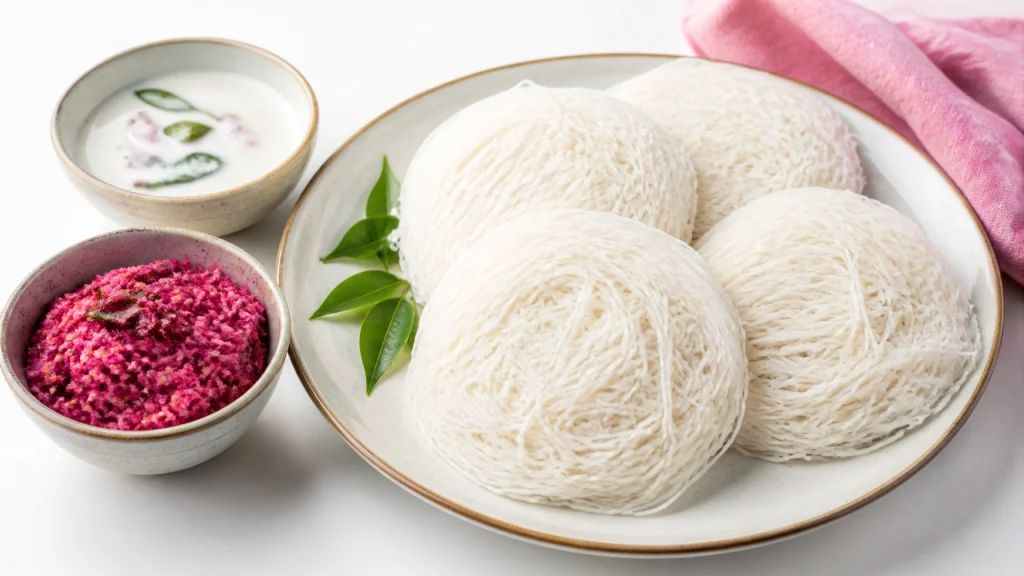
Hi there! If you love Sri Lankan food, you have probably met idiyappam: also called Sri Lankan string hoppers.
These delicate white noodle cakes are made from rice flour, pressed into fine strands, and steamed until soft. They look impressive, but the method is wonderfully simple once you understand one key step: the rice flour needs very hot water and proper kneading.
Get the dough right, and the noodles press smoothly. Steam them gently, and you get soft, tender string hoppers every time (no brittle noodle nests allowed!).
Serve them for breakfast, dinner, or whenever you want a comforting Sri Lankan meal at home.
What Are String Hoppers?
String hoppers, or idiyappam, are steamed rice-flour noodles traditionally shaped into small round cakes. Unlike pasta, they do not need boiling water. The noodles cook through steam, which keeps them light and soft.
Sri Lankan string hoppers are usually served with something rich and flavourful, such as:
- Creamy kiri hodi, a coconut milk gravy
- Spicy pol sambol
- Dhal, chicken, fish, or potato curry
- A simple coconut-based vegetable curry
Think of each hopper as a soft, edible net for catching curry. Deliciously practical!
Ingredients and Equipment
This recipe makes approximately 12–16 string hoppers, depending on the size of your mould.
For the String Hoppers
- 2 cups fine rice flour or idiyappam flour
- 1½ to 2 cups boiling water, added gradually
- ½ teaspoon salt
- 1 teaspoon coconut oil or neutral oil (optional)
- Extra oil for lightly greasing the trays or steaming mats
You can browse the Sri Lanka Stores Grocery collection for rice flour and pantry staples.
For Serving
- Fresh, frozen, or desiccated coconut
- Coconut milk or coconut cream for kiri hodi
- Fresh lime for sambol
- Red onion or shallots
- Dried chilli or chilli flakes
- Maldive fish, if you enjoy the traditional flavour
Find coconut milk, coconut cream, and other ingredients in the Coconut products collection. For chilli, pepper, and other curry essentials, explore the Sri Lanka Stores Spices collection.
Equipment
- String hopper mould or idiyappam press
- Fine-hole disc for the press
- Steamer or large pot with a steaming rack
- String hopper mats, idli plates, banana leaves, or lightly oiled trays
- Wooden spoon or sturdy spatula
The Key to Perfect Idiyappam: Hot Water
The most important technique in this recipe is mixing the rice flour with boiling water.
Hot water partially cooks the starch in the flour. This helps the dough become flexible enough to press through the mould. If you use cool or lukewarm water, the dough may stay grainy, crack easily, or refuse to form smooth strands.
You are looking for dough that is:
- Soft and smooth
- Warm and pliable
- Firm enough to hold its shape
- Not sticky
- Free from cracks
It should feel a little like soft modelling clay. If it feels like dry sand, it needs more water. If it behaves like glue, you have added too much.
Step-by-Step: How to Make Sri Lankan String Hoppers
1. Prepare the Flour
Place the rice flour and salt in a large heatproof bowl. Mix well so the salt spreads evenly.
If you are using oil, add it now. A small amount of coconut oil can make the dough softer and help the strands pass through the press more easily.

2. Add the Boiling Water Gradually
Bring the water to a rolling boil. Let it stand for one minute, then begin adding it to the flour little by little.
Stir continuously with a wooden spoon as you pour. Do not dump all the water in at once. Rice flour absorbs liquid quickly, and gradual mixing gives you much better control.
Start with about 1½ cups of water. Add more only if needed.
The mixture will first look lumpy. Keep stirring until all the flour is moistened and begins to form soft clumps.
3. Knead the Dough
When the mixture is cool enough to handle, transfer it to a clean work surface or knead it directly in the bowl.
Knead for 2–5 minutes until the dough becomes smooth. Press, fold, and turn it repeatedly. This is where the texture changes from rough and crumbly to soft and elastic.
If the dough cracks when you press it, add warm water one teaspoon at a time. If it feels sticky, dust in a little more rice flour.
Cover the finished dough with a damp cloth. Keep it warm while you work so the surface does not dry out.
4. Fill the String Hopper Mould
Lightly grease the inside of the string hopper press. Divide the dough into small portions and place one portion into the mould.
Do not overfill it. Fill the press to around two-thirds or three-quarters full. This leaves room for the plunger and makes pressing easier.
Attach the fine-hole disc. Fine holes create the delicate strands that give idiyappam its signature texture.
5. Press the Noodles in Circles
Place a lightly greased steaming mat, tray, or banana leaf on a flat surface.
Hold the mould directly above it and press gently while moving your hand in a circular motion. Create a loose spiral, starting from the centre and working outward.
Aim for an even layer. If the noodles are piled too thickly, the centre may stay gummy. If the layer is too thin, the hopper may become brittle.
You can make one layer for delicate string hoppers or add a second light layer for a slightly fuller texture.

6. Steam the String Hoppers
Fill your steamer with water and bring it to a steady boil. Place the prepared trays inside, then cover the steamer tightly with a lid.
Steam for approximately 5–8 minutes.
Smaller, thinner hoppers may be ready after five minutes. Larger or thicker ones may need closer to eight minutes.
They are done when the strands look set and slightly firm. The noodles should no longer appear wet or translucent.
Remove the trays carefully. Let the string hoppers rest for one or two minutes, then loosen them gently from the mat or tray.
Keep cooked hoppers covered with a clean cloth or lid. This prevents them from drying out while you steam the remaining batches.

Watch the Technique
A video can make the dough consistency and pressing motion much easier to understand. Watch this visual guide to see how string hoppers are shaped and steamed:
https://www.youtube.com/watch?v=9Lizj4h5XC8
Pay close attention to the dough. It should press out in continuous strands without requiring heroic effort (your breakfast should not become an arm workout).
Troubleshooting Idiyappam
Dry, Crumbly Dough
What happened: The dough needs more moisture, or the flour was not properly hydrated.
Fix: Add warm water one teaspoon at a time. Knead after each addition until the dough becomes smooth and flexible. Next time, make sure the water is very hot and add it gradually while stirring.
Sticky Dough
What happened: Too much water went into the mixture.
Fix: Add rice flour one tablespoon at a time and knead until the dough stops clinging to your hands. Lightly oil the mould before pressing.
Noodles Sticking Together
What happened: The dough may be too wet, the strands may be pressed too thickly, or the mould holes may be clogged.
Fix: Add a little rice flour to the dough. Clean and lightly oil the press. Press a thinner, more even layer onto the tray.
Brittle String Hoppers
What happened: The dough was too dry, the noodles were pressed too thinly, or the hoppers were steamed for too long.
Fix: Soften the dough with a little warm water. Press a slightly fuller layer and steam only until the strands are set. Keep cooked hoppers covered.
The Dough Is Hard to Press
What happened: It may be under-hydrated or too cool.
Fix: Knead in a few teaspoons of warm water. Keep the dough covered between batches. Warm dough presses more easily than dough left exposed on the counter.
Hoppers Stick to the Tray
What happened: The tray or mat was too dry, or the hoppers were removed immediately.
Fix: Lightly grease the surface before pressing. After steaming, wait one or two minutes before lifting the hopper gently from the edge.
How to Serve String Hoppers
Fresh idiyappam is best served warm. Arrange two or three string hoppers on each plate and add plenty of curry on the side.
Try them with:
- Pol sambol: Fresh coconut, chilli, onion, lime, and Maldive fish create a bright, spicy contrast. See our pol sambol recipe.
- Kiri hodi: A mild coconut milk gravy is perfect for soaking into the soft noodles.
- Dhal curry: Creamy parippu adds comforting savoury flavour. Try our Sri Lankan dhal curry guide.
- Chicken or fish curry: The string hoppers catch every drop of spicy gravy.
- Potato or vegetable curry: A gentle vegetarian pairing that works beautifully for breakfast.
For a complete Sri Lankan spread, add pol sambol, coconut milk gravy, dhal, and a hot cup of Ceylon tea.
Final Tips for Perfect String Hoppers
Remember these four rules:
- Use fine rice flour.
- Add boiling water gradually.
- Knead until the dough is soft and smooth.
- Steam gently and avoid overcooking.
Once you make a batch or two, you will quickly learn how the dough should feel. Trust your hands, keep the dough covered, and adjust the water slowly.
Now press, steam, and serve. Your homemade Sri Lankan string hoppers are ready for a delicious curry-filled adventure.
Have fun, and happy cooking!