Hi there! If you enjoy creamy desserts with a little chew, a little spice, and plenty of coconut flavour, you are going to love Sri Lankan sago pudding, also known as sawu pudding.
This gently set dessert is made with soft, translucent sago pearls, coconut milk, fresh milk, fragrant spices, and a sweet topping of kithul treacle or jaggery. It is comforting without being heavy. It is simple enough for a family dessert and special enough for a party table (which is a very useful combination).
Sawu pudding is one of those traditional Sri Lankan dishes that feels right at celebrations, festive gatherings, temple events, and relaxed family meals. You can serve it warm and spoonable, or chill it in a dish or individual moulds until it becomes softly set.
The secret is simple: cook the sago gently, warm the milk without boiling it, and stop before the pudding becomes too thick in the saucepan. It will firm up as it cools.
Why You’ll Love This Sawu Pudding
- Creamy coconut milk gives the pudding a rich, tropical flavour.
- Sago pearls add a soft, bouncy texture.
- Cardamom, nutmeg, and vanilla make every spoonful fragrant.
- Kithul treacle or jaggery adds a deep caramel-like sweetness.
- You can prepare it a day ahead.
- It works beautifully in one serving dish or individual moulds.
- The recipe is easy to adapt with milk powder, cashews, raisins, or agar-agar.
For more Sri Lankan dessert inspiration, explore our Desserts & Sweets collection and try traditional Sri Lankan watalappan next.
Sri Lankan Sago Pudding Ingredients
This recipe makes 6 servings.
- 1 cup sago pearls, rinsed
- 3 cups water, for cooking the sago
- 1½ cups thick coconut milk
- 1½ cups fresh milk
- Alternatively, mix 1½ cups water with milk powder according to the packet instructions.
- ½ cup white sugar, or adjust to taste
- ¼ cup kithul treacle or jaggery, plus extra for serving
- 4 cardamom pods, lightly crushed, or ½ teaspoon ground cardamom
- ¼ teaspoon freshly grated nutmeg
- 1 teaspoon vanilla extract
- A small pinch of salt
- ¼ cup cashews, roughly chopped
- ¼ cup raisins
- 1 teaspoon agar-agar, optional, for a firmer set
- 2 tablespoons water, only if using agar-agar
You can find pantry staples through the Grocery category, aromatic ingredients through the Spices category, and coconut milk through Coconut Products.
Sweetener note: Kithul treacle gives the pudding a dark, fruity, caramel-like flavour. Jaggery creates a deeper, more traditional sweetness. White sugar keeps the pudding lighter in colour. You can use one or a combination of all three.
Step 1: Soak and Cook the Sago

Place the sago pearls in a bowl and rinse them under cool water. Drain well.
For more evenly cooked pearls, soak the rinsed sago in fresh water for 30 minutes. Drain again before cooking. This short soak is especially helpful if your sago pearls are large.
Bring 3 cups of water to a gentle boil in a heavy-bottomed saucepan. Add the drained sago and stir immediately.
Cook over medium heat for about 10–15 minutes, stirring often. Keep an eye on the bottom of the pan because sago is enthusiastic about sticking (it has a real talent for it).
The pearls are ready when they look mostly translucent, with perhaps a tiny white dot in the centre. If several pearls remain hard and opaque, cook for another 2–3 minutes.
Do not drain the sago. The starchy cooking water helps create the pudding’s soft, creamy body.
Step 2: Warm the Coconut Milk and Milk

In a separate saucepan, combine the thick coconut milk, fresh milk, sugar, crushed cardamom, nutmeg, vanilla, and salt.
Warm the mixture over low heat, stirring until the sugar dissolves. Do not let it boil.
Boiling coconut milk can cause it to split, leaving you with a greasy layer and a less silky pudding. Gentle heat is your friend here. Think warm bath, not volcanic eruption.
Once the milk mixture is hot and fragrant, remove the cardamom pods if you prefer a smoother finish.
Step 3: Combine the Sago and Milk
Pour the warm coconut milk mixture into the saucepan with the cooked sago. Stir gently to combine.
Return the saucepan to low heat. Cook for 5–8 minutes, stirring slowly and regularly, until the mixture begins to thicken.
Add the kithul treacle or grated jaggery. Stir until fully dissolved. If your jaggery is hard, grate it first or dissolve it in a tablespoon of hot water before adding it to the pudding.
At this stage, the pudding should look creamy and loose. It should coat the back of a spoon, but it should still move easily when stirred.
Important: Do not cook until the pudding looks fully set in the pan. Sago pudding thickens considerably as it cools. If it looks perfect on the stove, it may become too firm in the fridge.
Optional: Add Agar-Agar for a Firmer Set
Traditional sawu pudding can set from the starch in the sago alone. If you want to unmould it neatly, add agar-agar.
Mix 1 teaspoon agar-agar with 2 tablespoons water in a small saucepan. Bring it to a gentle boil for about 1 minute, stirring constantly. Whisk it into the hot pudding mixture, then cook for another 1–2 minutes.
Use agar-agar sparingly. Too much will make the pudding rubbery rather than creamy.
Step 4: Set the Pudding
Lightly rinse a serving dish or six small moulds with water. Do not dry them completely. The thin layer of water can help with unmoulding later.
Pour in the warm pudding. Tap the dish gently on the counter to release any large air bubbles.
Leave the pudding at room temperature for about 20–30 minutes. Then cover and refrigerate for at least 4 hours, or overnight for the firmest set.
You can also serve the pudding warm in bowls if you prefer a softer, spoonable consistency. Both versions are delicious.
Step 5: Garnish and Serve

Toast the cashews in a dry frying pan over medium-low heat until lightly golden. Add the raisins for the final 30 seconds, just until they soften slightly.
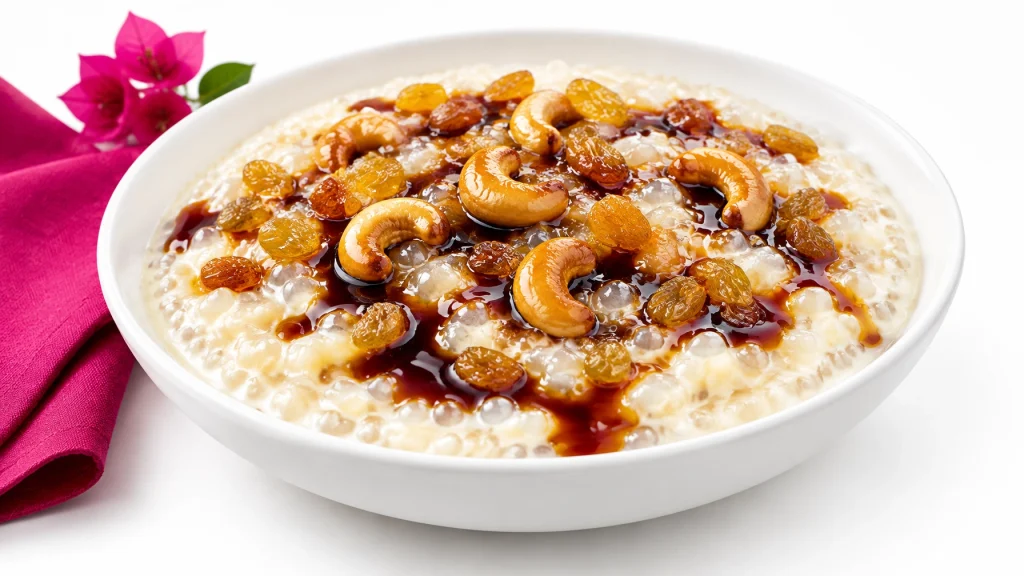
Spoon the toasted cashews and raisins over the chilled pudding. Finish with a generous drizzle of kithul treacle.
To unmould the pudding, dip the outside of each mould in warm water for a few seconds. Run a thin knife around the edge, place a plate on top, and turn it over confidently.
If it does not release immediately, do not panic. Give it another few seconds in the warm water. Dessert drama is rarely improved by force.
Tips for a Smooth, Creamy Set
Keep the heat low
High heat can split the coconut milk and make the pudding look oily. Warm the milk gently and avoid a rolling boil.
Stir often, but not aggressively
Frequent stirring prevents the sago from sticking. However, vigorous stirring can break the pearls and create a gluey texture.
Stop cooking while the pudding is loose
The pudding continues to thicken as it cools. Remove it from the heat when it is creamy and pourable.
Strain the milk mixture if needed
If you use freshly ground spices or grated jaggery, strain the warm milk mixture before combining it with the sago. This gives you a smoother finish.
Use thick coconut milk
Thin coconut milk can leave the pudding watery. Choose full-fat, thick coconut milk for the richest result.
Troubleshooting Sri Lankan Sago Pudding
The sago will not soften
Your pearls may need a longer soak or cooking time. Add a little boiling water and continue cooking over medium-low heat. Stir regularly until the pearls become translucent.
The pudding will not set
First, chill it for at least 4–6 hours. It may simply need more time.
If it is still loose, warm the pudding gently and whisk in the prepared agar-agar mixture described above. Avoid adding extra dry agar-agar directly to the pudding, as it can clump.
The coconut milk has split
The heat was probably too high. If the split is mild, whisk the pudding gently and add a splash of warm milk. For the best result next time, keep the coconut milk below a simmer.
The texture is gluey
This usually happens when the sago is overcooked, the pudding is reduced too far, or it is stirred too vigorously. Add a little warm milk or coconut milk and stir gently to loosen it.
The pudding is too sweet
Serve it with unsweetened coconut cream or fresh fruit. A small pinch of salt can also balance the sweetness.
Make-Ahead and Serving Tips
Sri Lankan sago pudding is an excellent make-ahead dessert. Prepare it the day before, cover it tightly, and refrigerate until needed.
For a party, pour the pudding into small glasses or ramekins. Individual servings are easy to decorate and simple for guests to pick up.
Serve it chilled with:
- Kithul treacle
- Grated jaggery
- Toasted cashews
- Raisins
- Fresh mango
- Sliced banana
- A spoonful of coconut cream
Store leftovers in the refrigerator for up to 3 days. The pudding will become firmer over time, so let it stand at room temperature for 10–15 minutes before serving.
Watch the Recipe
Have fun, and happy cooking!
Enjoy a Spoonful of Sri Lanka
Creamy, fragrant, and gently sweet, Sri Lankan sago pudding is a lovely way to explore the softer side of Sri Lankan cooking. The tender pearls, coconut milk, warm spices, and kithul treacle create a dessert that feels both humble and celebratory.
Serve it at your next family gathering, festive table, or quiet evening at home. Add the cashews. Pour over the treacle. Take the first spoonful while it is still beautifully chilled.
Have fun, and save room for dessert!