Hi there! If you are searching for a proper mung kavum recipe, you have found a sweet little treasure.
Mung kavum, also called mung kevum, is one of the much-loved mung bean sweets Sri Lankan families prepare for Avurudu, the Sinhala and Tamil New Year. You will often find it sitting proudly on the New Year sweet platter beside kokis, konda kavum, aluwa and other traditional treats.
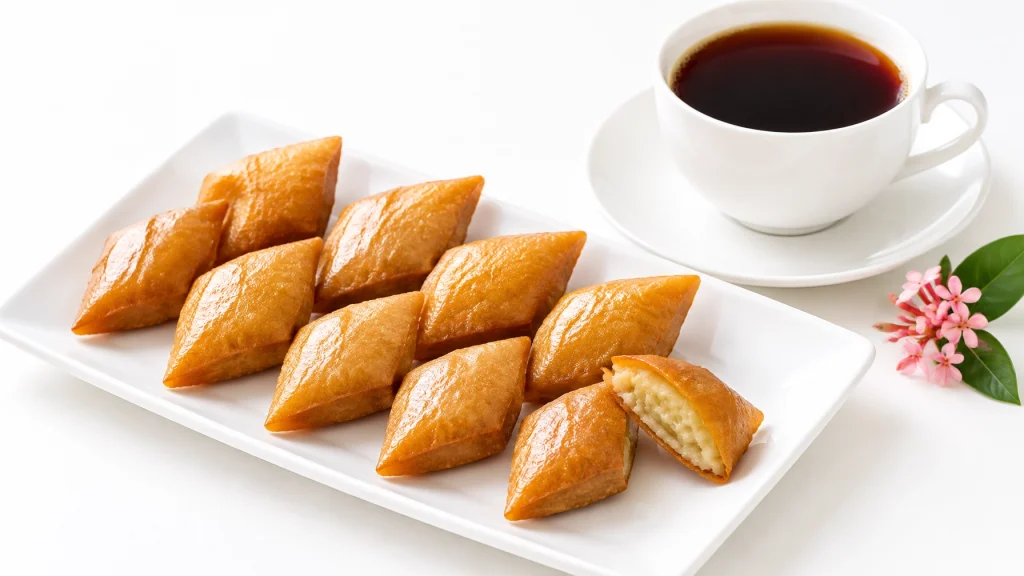
These small diamond-shaped sweets are made with mung bean flour, rice flour and fragrant kithul treacle. Each piece is coated in a light coconut milk batter, then gently deep-fried. The result? A thin, crisp shell with a soft, chewy, treacle-rich centre (the best sort of kitchen magic).
This recipe makes approximately 20–24 mung kavum, depending on how large you shape them.
What makes mung kavum special?
The secret is contrast. The outer coating should be delicate and lightly crisp, while the inside stays tender and chewy. Kithul treacle provides a deep caramel flavour with a gentle smoky sweetness. Cardamom adds a warm, floral note without taking over.
Unlike some richer oil cakes, mung kavum has a lovely earthy flavour from green gram flour. It is sweet, but not one-dimensional. Think of it as the quiet, charming cousin on the Avurudu platter.
For another festive favourite, try our traditional konda kavum recipe. You can also browse more ideas in our Desserts & Sweets collection.
Ingredients
For the mung kavum dough
- 450 g mung bean flour, also called green gram flour
- 200 g fine rice flour
- 500 ml kithul treacle
- 1 teaspoon ground cardamom
- ¼ teaspoon salt
- 2 tablespoons coconut oil, for kneading and shaping if needed
For the coating batter
- ½ cup fine rice flour
- 1 cup coconut milk
- ¼ teaspoon turmeric powder, for the traditional golden colour
- A pinch of salt
For frying
- Approximately 750 ml coconut oil, or enough for deep-frying
You can find the main ingredients in the Sri Lanka Stores Grocery category. Shop cardamom and turmeric in the Spices category, and choose coconut milk and coconut oil from Coconut Products.
Ingredient note: Kithul treacle gives mung kavum its most distinctive Sri Lankan flavour. If you cannot find it, use a thick coconut treacle as a substitute. The taste will be slightly different, but still delicious.
How to make mung kavum
1. Prepare the mung flour mixture
Place the mung bean flour and 200 g rice flour in a large bowl. Sift them together to remove lumps and distribute the flours evenly.
Set aside 2–3 tablespoons of the flour mixture. You may need it later if the dough feels too soft or sticky.
2. Warm the kithul treacle
Pour the kithul treacle into a heavy-based saucepan. Add the cardamom and salt.
Warm it over medium heat until it begins to bubble gently. Do not boil it for a long time. Overcooked treacle can make the finished kavum hard instead of soft and chewy.
Remove the pan from the heat as soon as the treacle is hot and lightly bubbling.
3. Make the soft dough
Add the flour mixture to the warm treacle gradually. Add a spoonful at a time, stirring continuously with a whisk or wooden spoon.
Keep mixing until the flour absorbs the treacle and the mixture becomes thick. If it looks loose, add a little more of the reserved flour. If it becomes too firm, add a small splash of warm treacle or coconut milk.
Transfer the mixture to a heatproof bowl. Once it is warm rather than piping hot, add the coconut oil and knead gently until you have a soft dough.

4. Rest the dough
Cover the dough and let it rest for at least 30 minutes.
This step matters. Resting allows the flours to absorb the treacle properly and makes the dough easier to shape. It also helps the finished mung kavum stay tender rather than crumbly.
5. Shape the kavum
Lightly grease a board or tray with coconut oil. Place the dough on it and flatten it gently.
You can shape the kavum in two traditional ways:
- Roll the dough to approximately ½ cm thick and cut it into small diamonds.
- Pinch off small portions and roll them into neat balls.
Diamond shapes look especially lovely on an Avurudu platter, while balls are easier if you are making mung kavum for the first time. No one will complain about the shape once the tea arrives.
Dust the pieces lightly with rice flour if they stick. Arrange them on a greased tray while you prepare the coating.
6. Make the coconut milk batter
Add the rice flour, turmeric and salt to a bowl. Slowly whisk in the coconut milk.
The batter should be smooth and thick enough to coat the back of a spoon. It should not be watery. If it is too thin, add a little rice flour. If it is too thick, add coconut milk one tablespoon at a time.

Let the batter rest for 10–15 minutes. Give it another stir just before dipping the kavum.
7. Heat the coconut oil
Pour the coconut oil into a deep, heavy pan. Heat it over medium heat to approximately 165–175°C.
If you do not have a thermometer, drop in a tiny amount of batter. It should rise steadily with small bubbles around it. It should not turn brown immediately.
Keep the heat moderate. High heat is the fastest route to a dark outside and a raw centre (a rather disappointing double act).
8. Coat and fry
Dip one mung kavum piece into the batter. Turn it gently so the coating covers the entire surface. Let the excess batter drip back into the bowl.
Carefully lower the coated piece into the oil. Add only a few pieces at a time. Crowding lowers the oil temperature and can make the sweets greasy.
Fry gently, turning occasionally with a slotted spoon. Keep the colour light golden rather than deep brown. The outside should become firm and lightly crisp while the centre cooks through.

Fry for approximately 4–6 minutes, depending on the size of the pieces. Remove one test piece and allow it to cool for a minute before cutting into it. The middle should be soft and cooked, not wet or paste-like.
Transfer the finished mung kavum to a wire rack or a plate lined with paper towels. Let them cool completely before storing.
Tips for soft, chewy mung kavum
- Use fine flour. Coarse flour can create a gritty texture.
- Do not overcook the treacle. Heat it until bubbling, then remove it from the stove.
- Rest the dough. This gives the flours time to absorb the liquid.
- Keep the batter thick. A thin coating can split or slide off in the oil.
- Fry in small batches. Stable oil temperature gives you even colour and texture.
- Keep the oil medium-hot. Gentle frying cooks the middle without scorching the shell.
- Let the sweets cool before judging them. The centre firms slightly as it cools, while staying pleasantly chewy.
Troubleshooting
The mung kavum stays raw in the middle
The oil is probably too hot, or the pieces are too thick. Lower the heat and fry more gently. Shape smaller pieces next time, or flatten the dough slightly before coating.
The coating splits in the oil
Your batter may be too thin, or the dough may be too warm and soft. Add a little rice flour to the batter and let the shaped pieces rest for a few minutes before frying.
The outside becomes too dark
Lower the heat immediately. Dark colour usually means the oil temperature is too high. Mung kavum should be golden and glossy, not deep brown.
The kavum turns oily or greasy
The oil may be too cool, or you may be frying too many pieces at once. Fry in smaller batches and wait for the oil to return to temperature between batches. Drain the sweets on a wire rack so excess oil can run off.
Watch the mung kavum method
Follow the traditional technique in this recipe video. It is especially helpful for seeing the correct dough consistency and how gently the sweets should fry.
Storage and serving suggestions
Allow the mung kavum to cool completely before storing. Place them in an airtight container and keep them at room temperature for up to 4–5 days.
Do not seal them while warm. Trapped steam can soften the outer shell and make the sweets feel greasy.
Serve mung kavum at room temperature with a cup of black Ceylon tea. They are wonderful on an Avurudu sweet platter alongside watalappan, kokis and konda kavum.
You can also serve them after a family meal, pack them into a lunchbox or arrange them in small paper cases for guests. They make a thoughtful festive gift, too (especially if you keep a few back for yourself).

Final thoughts
This mung kavum recipe gives you a chewy, fragrant Sri Lankan sweet with a crisp outer shell and a lovely kithul treacle flavour. Take your time with the dough, keep the oil steady and fry gently.
The first batch may not look perfectly identical. That is completely fine. Traditional sweets are made to be shared, enjoyed and passed around the table, not inspected with a ruler.
Gather your ingredients, put the kettle on and bring a little Avurudu sweetness into your kitchen. Have fun!