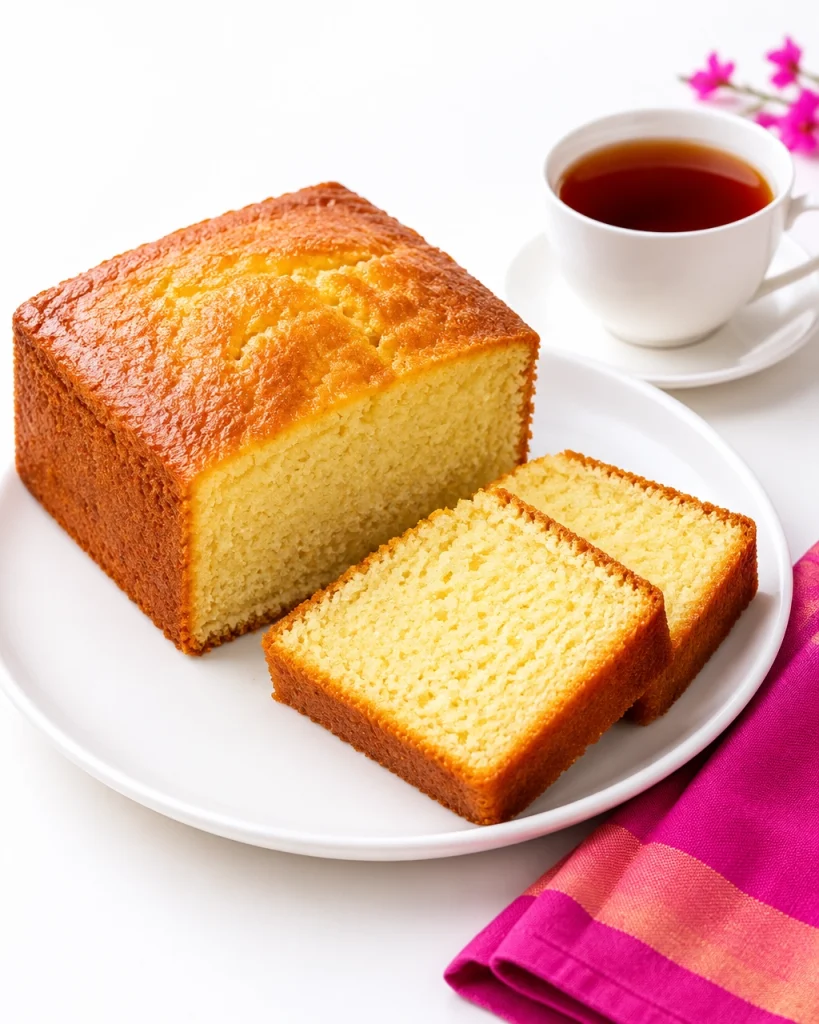
Hi there! If you grew up around Sri Lankan tea time, you probably know this cake well. Sri Lankan butter cake is soft, buttery, gently sweet, and wonderfully simple. It is the kind of cake that appears on a family table without much fuss (but disappears remarkably quickly).
You will find it at everyday tea time, birthday parties, school gatherings, Avurudu celebrations, and visits from relatives. Some families serve it plain. Others add a light dusting of icing sugar or a simple glaze. Either way, its fine crumb and rich buttery flavour do all the talking.
This recipe uses the classic creaming method. You will cream butter and sugar until light, add the eggs one at a time, then fold in the flour and milk. Give the batter a little care, and you will have a golden cake with a moist, tender centre.
Why you will love this Sri Lankan butter cake
- It uses simple pantry ingredients.
- It has a fine, buttery crumb without heavy frosting.
- It is beginner-friendly.
- You can serve it plain or dress it up for celebrations.
- It pairs beautifully with hot Ceylon tea.
For the best texture, weigh your ingredients if you can. Traditional butter cake follows a pound-cake-style ratio, so accurate measurements make a real difference.
Ingredients
This recipe makes one 20 cm (8-inch) square cake, or approximately 16–20 slices.
- 250 g unsalted butter, softened but not melted : shop grocery essentials
- 250 g caster sugar : shop grocery essentials
- 4 large eggs, at room temperature
- 250 g plain flour or all-purpose flour : shop grocery essentials
- 2 teaspoons baking powder : shop grocery essentials
- 1–2 teaspoons vanilla extract or vanilla essence : browse spices and flavourings
- 60–80 ml milk, at room temperature : shop grocery essentials
- ¼ teaspoon salt
- Icing sugar, for dusting (optional) : shop grocery essentials
You can also add 1–2 tablespoons of milk powder for a slightly richer, milkier flavour. It is optional, but a lovely touch if you have some in the cupboard.

Before you start
Take the butter, eggs, and milk out of the refrigerator ahead of time. Room-temperature ingredients blend together more smoothly and help prevent a curdled batter.
Your butter should be soft enough to leave a gentle dent when pressed. It should not look oily or melted. If the butter is too warm, the cake may turn greasy. If it is too cold, it will not cream properly.
Grease an 8-inch square cake tin and line the base with baking paper. Preheat your oven to 165°C (325°F).
How to make Sri Lankan butter cake
1. Cream the butter and sugar
Place the softened butter and salt in a large mixing bowl. Beat for 1–2 minutes until creamy.
Add the caster sugar. Continue beating for 5–7 minutes, scraping down the sides of the bowl halfway through. The mixture should become pale, soft, and fluffy.
This step is important. Creaming traps tiny air bubbles in the butter, which helps give your cake a lighter crumb. Do not rush it (this is the perfect moment to put the kettle on).
2. Add the eggs one at a time
Crack the eggs into a separate bowl. Check for shell pieces, then add the eggs to the butter mixture one at a time.
Beat well after each addition, but stop as soon as the egg disappears into the batter. Scrape down the bowl between additions.
Add the vanilla and mix briefly.

If the mixture looks slightly curdled at this stage, do not panic. It usually means the ingredients were different temperatures or the eggs were added too quickly. A spoonful of the flour mixture will usually bring the batter back together.
3. Sift the dry ingredients
Sift the flour and baking powder into a bowl. Add the optional milk powder if you are using it.
Sifting removes lumps and distributes the baking powder evenly. That means no surprise pockets of baking powder in your finished cake (always a good thing).
4. Fold in the flour and milk
Add the flour mixture in three additions, alternating with the milk. Begin and end with the dry ingredients.
For example:
- Add one-third of the flour and fold gently.
- Add half the milk and fold again.
- Add another third of the flour.
- Add the remaining milk.
- Finish with the final third of the flour.
Use a spatula and fold gently. Do not beat or stir vigorously once the flour goes in. Stop as soon as you no longer see dry flour.

Your batter should be smooth, pale yellow, and thick but easy to spread. If it feels unusually stiff, add another tablespoon of milk.
5. Fill the cake tin
Transfer the batter to your prepared tin. Use a spatula to spread it evenly into the corners.
Tap the tin gently on the counter two or three times to release any large air pockets. Do not whack it like a drum (a gentle tap is plenty).
6. Bake until golden
Place the tin in the preheated oven and bake for 35–45 minutes. The exact time depends on your tin and your oven.
Your Sri Lankan butter cake is ready when:
- The top is pale golden.
- The centre springs back lightly when touched.
- A skewer inserted into the middle comes out clean or with a few moist crumbs.
Try not to open the oven during the first 30 minutes. A sudden drop in temperature can cause the centre to sink.

7. Cool and slice
Leave the cake in the tin for 10 minutes. Carefully turn it out onto a wire rack and remove the baking paper.
Allow it to cool completely before slicing. The crumb continues to set as the cake cools, so cutting too early can make it crumble.
Dust the top with icing sugar just before serving, if you like.
Tips for a moist, fine crumb
Use softened butter
Soft butter creams properly with the sugar. Melted butter will not hold the same air, and cold butter may leave lumps.
Measure flour carefully
Too much flour makes the cake dry and heavy. Weigh it for the most reliable result. If you use cups, spoon the flour into the cup and level the top rather than scooping directly from the bag.
Do not overmix
Overmixing develops gluten and can make your cake rubbery or dense. Fold the flour in gently and stop as soon as the batter comes together.
Keep the milk at room temperature
Cold milk can make the batter seize or curdle. Room-temperature milk blends more evenly.
Do not overbake
The cake should be golden, not dark brown. Remove it as soon as a skewer comes out clean. Every extra minute in the oven removes moisture.
Troubleshooting your butter cake
Why did my cake sink in the centre?
A sinking centre usually comes from underbaking, opening the oven too early, or adding too much liquid. It can also happen if you overbeat the eggs and incorporated too much air.
Bake until the centre springs back and the skewer is clean. Keep the oven door closed during the early baking stage.
Why is my cake dry?
The most common causes are too much flour, overmixing, or overbaking. Weigh the flour, fold gently, and start checking the cake a few minutes before the suggested baking time.
Why did my batter curdle?
Your ingredients may have been too cold, or the eggs may have been added too quickly. Add one egg at a time and mix only until incorporated. If the batter still looks curdled, mix in a tablespoon of the sifted flour before continuing.
The cake can still turn out well. It may simply have a slightly tighter crumb.
Why is the cake dense?
The butter and sugar may not have been creamed long enough. Beat until the mixture is visibly pale and fluffy. Also check that your baking powder is fresh.
How to serve Sri Lankan butter cake
The classic way is simple: cut the cake into neat squares and serve it with a cup of hot Ceylon tea. A splash of milk in the tea is especially comforting.
For a celebration, try one of these easy finishing touches:
- Dust the top with icing sugar.
- Drizzle with a thin vanilla glaze.
- Serve with fresh berries and whipped cream.
- Add a little lemon or lime zest to the glaze.
- Layer two cakes with vanilla buttercream for a birthday cake.
- Serve warm slices with a scoop of vanilla ice cream.
For another Sri Lankan tea-time favourite, try our Kimbula Banis recipe. If you are planning a full Sri Lankan celebration table, our Kavum recipe makes a delicious companion.
Watch the recipe video
Want to see the creaming and folding methods in action?
Storage
Store the cooled cake in an airtight container at room temperature for up to 2 days. For longer storage, refrigerate it for up to 5 days.
Bring refrigerated slices to room temperature before serving. You can also freeze individual pieces, wrapped well, for up to 3 months. Place baking paper between the slices so you can remove them one at a time.
Serve with tea, share generously, and enjoy that first buttery bite. Have fun baking!