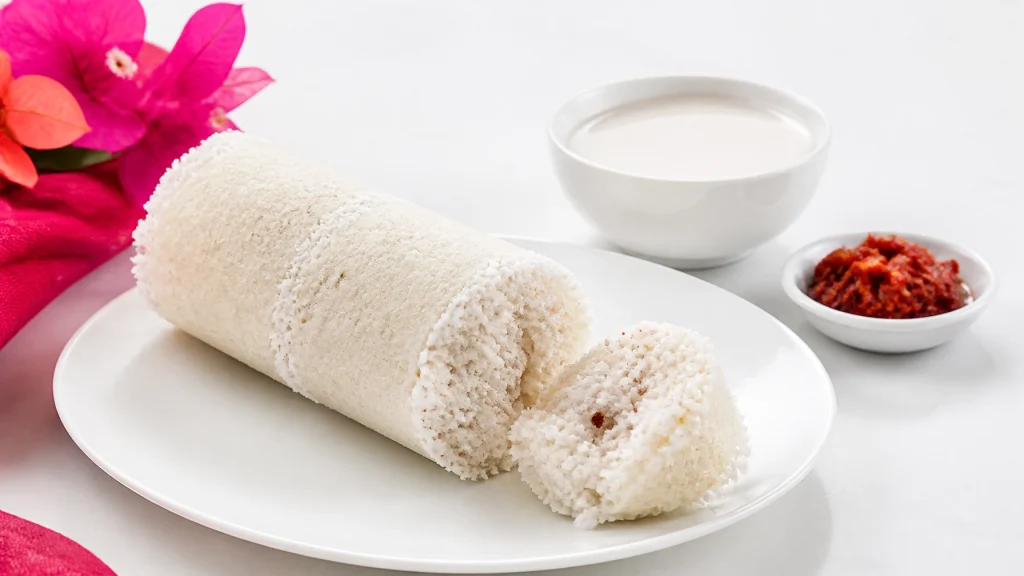
Hi there! If you love comforting Sri Lankan recipes, you are going to enjoy pittu.
Pittu is made from roasted rice flour, grated coconut, salt, and water. The mixture stays crumbly rather than becoming a dough. You then steam it in a tall cylindrical mould called a pittu bambuwa until it becomes light, tender, and fragrant.
In Sri Lanka, pittu is a beloved breakfast and dinner staple. Families serve it with creamy coconut milk gravy, spicy lunu miris, dhal, or chicken and fish curry. It is simple food, but it is never boring (especially when the curry gravy soaks into every crumb).
This pittu recipe makes soft, fluffy cylinders with the perfect crumbly texture. Let’s get steaming!
What does pittu taste like?
Pittu has a gentle roasted flavour from the rice flour and a sweet, tropical aroma from the coconut. The texture is soft and slightly grainy, with delicate crumbs that break apart easily.
Unlike rice noodles or a firm cake, pittu should not feel dense. Think of it as a steamed, coconut-scented rice flour crumb that is ready to catch every drop of gravy on your plate.
It is one of those traditional Sri Lankan dishes that looks humble but delivers plenty of comfort.
Ingredients
Makes 3–4 servings.
- 2 cups rice flour, preferably roasted. Browse the Sri Lanka Stores Grocery category for pantry staples.
- 1 to 1½ cups grated coconut. For a convenient alternative, explore the Coconut Products category.
- ½ to ¾ teaspoon salt, or to taste. Find pantry essentials in the Grocery category.
- ½ to ¾ cup warm water, added gradually.
You will also need:
- A pittu mould or pittu bambuwa
- A pot of boiling water
- A large mixing bowl
- A spoon or chopstick for pushing out the cooked pittu
Important texture note: You may not need all the water. Add it slowly. Pittu mixture should resemble coarse, damp sand: not wet dough.
Step 1: Roast the rice flour
If you are using pre-roasted rice flour, you can skip this step.
Place the rice flour in a dry frying pan over low heat. Stir constantly for 3–5 minutes. You are not trying to brown the flour. Simply warm it until it smells lightly nutty and toasted.
Remove the pan from the heat and let the flour cool for a few minutes.
Roasting gives the pittu a deeper flavour and helps create the classic crumbly texture. Keep the heat gentle. Burnt flour will bring a bitter taste to the party, and nobody invited it.
Step 2: Mix the flour, coconut, and salt
Add the cooled rice flour to a large bowl. Stir in the salt.
Add the grated coconut and mix everything together with your fingertips. Break up any large coconut clumps so the mixture is evenly combined.

Now sprinkle in the warm water a little at a time. Rub the mixture between your fingers as you go.
Do not pour in the water all at once. That is the fastest route to heavy, clumpy pittu.
Continue mixing until the flour resembles coarse breadcrumbs or damp sand. When you squeeze a handful, it should hold together briefly. When you rub it again, it should fall apart into small crumbs.
Step 3: Check the crumb
Pick up a small handful of the mixture and squeeze it gently.
- If it forms a soft lump but breaks apart easily, it is ready.
- If it immediately turns into a firm ball, it is too wet.
- If it feels completely dry and will not hold together at all, add another teaspoon of warm water.
This small test is the secret to a good pittu recipe. You are looking for moisture without heaviness.
Leave the mixture for 5 minutes. This gives the rice flour time to absorb the water evenly. Give it another gentle rub before filling the mould.
Step 4: Prepare the steamer
Fill the bottom pot of your pittu steamer with water. Bring it to a strong boil.
The water should bubble steadily before you place the mould on top. Pittu cooks through steam, so a lazy simmer may leave the centre undercooked.
If you do not have a traditional pittu bambuwa, use a perforated steaming tube or another tall steamer that allows steam to pass through the mixture. Just make sure it is heat-safe and easy to handle.
Step 5: Fill the pittu mould loosely
Place a little grated coconut into the bottom of the mould. Add a layer of the crumbly rice flour mixture. Continue alternating between coconut and flour until the mould is nearly full.
You can also mix the coconut directly into the flour, but layers create a beautiful texture and help prevent the pittu from becoming compacted.
Fill the mould lightly. Do not press or pack the mixture down.
Steam needs room to move through the crumbs. If you compress the flour, the finished pittu may become dense and chewy instead of light and fluffy.

Step 6: Steam the pittu
Fit the lid onto the mould and place it over the pot of boiling water.
Steam for approximately 8–12 minutes, depending on the size of your mould. You should see strong steam escaping from the top when the pittu is nearly cooked.
The pittu is ready when the raw flour smell has disappeared and the cylinder feels firm but not hard.
Remove the mould carefully. Let it rest for 1–2 minutes, then gently push the pittu onto a serving plate using the mould’s rod or the handle of a wooden spoon.
Serve it hot. Pittu is at its best when freshly steamed (although a good curry can rescue almost anything).
Need a Visual Guide?
Sometimes seeing it in action makes all the difference! Check out this fantastic tutorial from The Flavor Bender to see the layering technique in detail:
https://youtu.be/2rvKzEtKUAw
Tips for light and fluffy pittu
Do not over-wet the mixture
Add water teaspoon by teaspoon near the end. Wet flour creates sticky lumps and dense pittu.
Pack the mould loosely
This is essential. Spoon the crumbs into the mould and leave them airy. Never press them down like you are filling a suitcase for a long holiday.
Use properly boiling water
Steam must circulate strongly through the mould. Start with boiling water and check the pot during cooking so it does not boil dry.
Use fresh coconut when possible
Freshly grated coconut gives pittu a softer texture and richer aroma. If you use desiccated coconut, soak it in warm water first and squeeze out excess moisture.
Do not oversteam
Oversteaming can make the pittu dry and firm. Start checking around the 8-minute mark, especially if your mould is narrow.
Troubleshooting your pittu recipe
Why is my pittu dense and clumpy?
The mixture was probably too wet, packed too tightly, or steamed with insufficient heat.
Next time, add less water and fill the mould more gently. Make sure the water is properly boiling before steaming.
Why does my pittu have a dry, sandy texture?
The mixture did not receive enough water, or the flour was not mixed evenly.
Sprinkle in a little more warm water and rub the flour thoroughly between your fingers. The crumbs should hold together when squeezed but still break apart easily.
Why is my pittu sticking to the mould?
Let the cooked pittu rest for a minute before unmoulding. If it still sticks, lightly oil the inside of the mould before filling it.
Do not force it out immediately. A gentle push works better than a dramatic wrestling match.
Why is the centre still raw?
Your mould may be overfilled, or the steam may not be strong enough. Return it to the steamer for another 3–5 minutes and check that the pot has plenty of boiling water.
What to serve with pittu
Pittu loves bold, saucy accompaniments. Try it with:
- Kiri hodi, a mild and creamy coconut milk gravy
- Lunu miris, a fiery onion, chilli, lime, and Maldive fish sambol
- Sri Lankan chicken curry
- Sri Lankan fish curry
- Dhal curry
- Seeni sambol, a sweet and spicy caramelised onion relish
- Coconut sambol or pol sambol
For more ideas, browse our Sambols & Mallums collection, including sambol recipes that bring heat, freshness, and contrast to steamed rice-flour dishes.
You can also serve pittu as part of a larger Sri Lankan breakfast spread with perfect string hoppers, coconut milk gravy, and a spicy sambol. If you enjoy coconut-rich rice dishes, explore the Rice & Main Dishes collection for more traditional inspiration.

How to store leftover pittu
Pittu is best eaten fresh, but you can store leftovers in an airtight container in the refrigerator for up to 2 days.
To reheat, place it in a steamer for a few minutes until warmed through. Avoid microwaving it for too long, as the rice flour can become dry and firm.
You can also crumble leftover pittu into a pan and warm it with a little coconut milk. Add curry, sambol, or a fried egg for a quick second-day meal.
Final thoughts
This pittu recipe relies on just four ingredients, but the method matters. Roast the flour gently. Add water slowly. Keep the mixture crumbly. Fill the mould loosely. Steam over properly boiling water.
Once you understand the texture, pittu becomes wonderfully straightforward.
Serve your cylinders hot with kiri hodi, lunu miris, curry, or seeni sambol. Then sit down and enjoy one of Sri Lanka’s most comforting traditional dishes.
Have fun steaming!