Hi there! If you love bold seafood dishes, this Sri Lankan crab curry deserves a place at your table.
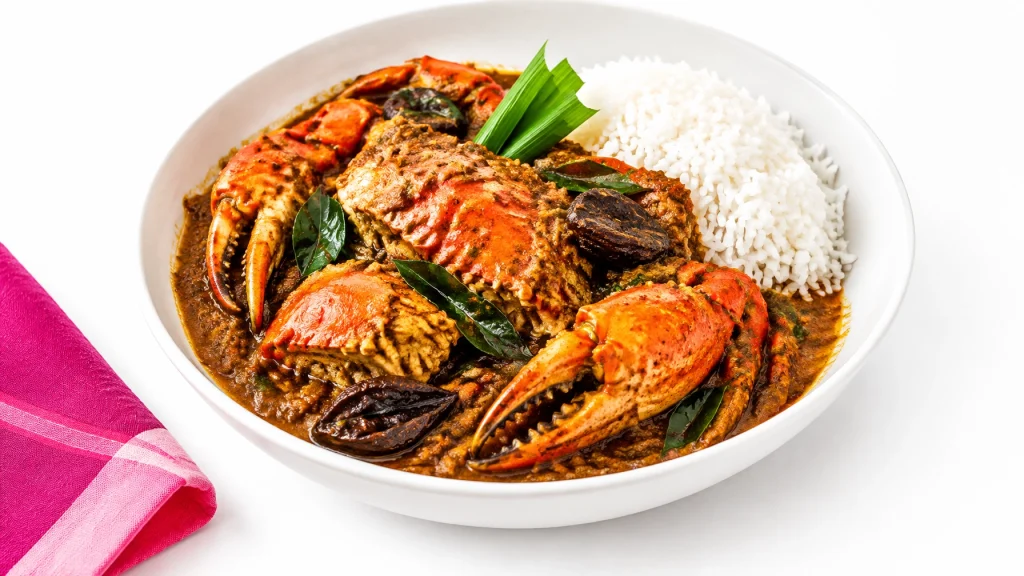
Known as Kakuluwa Curry, this iconic dish combines sweet crab meat with a dark, fiery gravy made from roasted curry powder, coconut milk, garlic, ginger, curry leaves, pandan and goraka. The sauce is rich, sour, spicy and wonderfully aromatic.
And yes, you will probably need your fingers.
That is part of the fun.
Unlike a lighter coconut seafood curry, Kakuluwa Curry gets its deep colour and smoky flavour from Sri Lankan roasted curry powder. Goraka adds a sharp, fruity sourness that cuts through the richness of the crab and coconut milk. The result is messy, intense and completely worth the pile of shells.
What Makes Sri Lankan Crab Curry Distinct?
Three ingredients give this curry its unmistakable Sri Lankan character:
- Roasted curry powder: Whole spices are roasted before grinding, creating a darker, toastier flavour.
- Goraka: This dried souring fruit adds a clean, tangy edge. You can use tamarind if goraka is unavailable.
- Coconut milk: Thin coconut milk builds the gravy, while thick coconut milk gives the finished curry a smooth, luxurious texture.
For authentic pantry ingredients, browse the Sri Lanka Stores Grocery collection, Spices collection, and Coconut Products collection.
Sri Lankan Crab Curry Ingredients
Serves: 4
Prep time: 25 minutes
Cooking time: 30–35 minutes
For the crab
- 1–1.2 kg fresh live crab or cleaned crab pieces
- ½ teaspoon turmeric powder
- 1 teaspoon salt
If you are cleaning live crab at home, chill it briefly to immobilise it, then remove the top shell, gills and innards. Rinse the crab well under cold water and cut it into manageable pieces. Lightly crack the claws with the back of a heavy knife or a crab cracker so the gravy can reach the meat.
You can also ask your fishmonger to clean and cut the crab for you. No medals are awarded for wrestling with dinner.
For the aromatic base
- 2 tablespoons coconut oil
- 1 large red onion, thinly sliced
- 5 garlic cloves, crushed
- 1-inch piece ginger, crushed or finely grated
- 12–15 curry leaves
- 1 pandan leaf, cut into shorter pieces
- ½ teaspoon mustard seeds
- ¼ teaspoon fenugreek seeds
- 1 small piece Ceylon cinnamon
For the spice gravy
- 2 tablespoons Sri Lankan roasted curry powder
- 1–2 teaspoons Sri Lankan red chilli powder
- ½ teaspoon turmeric powder
- 4–6 pieces dried goraka, soaked in warm water for 10–15 minutes
- 1 cup thin coconut milk
- ¾ cup thick coconut milk
- ½–1 cup water, as needed
- Salt to taste
- Juice of ½ lime, optional
Use the Sri Lanka Stores coconut products range for coconut milk or coconut cream. If your coconut milk comes in one can, dilute part of it with water to make thin coconut milk and reserve the richer portion for finishing.

How to Make Sri Lankan Crab Curry
1. Clean and season the crab
Place the cleaned crab pieces in a large bowl. Add turmeric and salt, then toss gently until every piece is coated.
Set the crab aside for 10–15 minutes while you prepare the aromatics. This short rest seasons the meat and helps reduce any raw seafood smell.
Keep the shell pieces and claws. They add flavour to the gravy (and make the finished dish look wonderfully dramatic).
2. Crush the aromatics
Crush the garlic and ginger together using a mortar and pestle, or finely chop them with a knife.
You are not aiming for a perfectly smooth paste. A rough crush releases plenty of aroma while leaving little golden nuggets of garlic and ginger throughout the curry.
Slice the red onion and cut the pandan leaf into smaller pieces.
3. Bloom the spice base
Heat the coconut oil in a large, heavy-bottomed pot over medium heat.
Add the mustard seeds. Once they begin to pop, add the fenugreek seeds, cinnamon, curry leaves and pandan. Stir for 30 seconds until the oil smells fragrant.
Add the sliced onion and cook for 4–5 minutes until soft and lightly golden. Add the crushed garlic and ginger, then cook for another 1–2 minutes.

4. Add and bloom the ground spices
Lower the heat slightly. Add the roasted curry powder, chilli powder and turmeric.
Stir constantly for 30–45 seconds. The spices should become fragrant and coat the aromatics, but they should not burn. If the pot looks dry, add a small splash of water.
This step matters. It wakes up the roasted spices and builds the dark, savoury foundation of the curry.
5. Simmer the gravy
Pour in the thin coconut milk and add the soaked goraka pieces. Add a few tablespoons of the goraka soaking liquid if you want a sharper sour note.
Season with salt and add enough water to create a loose gravy. Bring the mixture to a gentle simmer, then cook uncovered for 8–10 minutes.
The gravy should smell rich and spicy before the crab goes in. If it tastes flat at this stage, add a little more salt. Salt is the quiet hero here.
6. Cook the crab
Add the crab pieces to the simmering gravy. Turn them gently so the sauce coats the shells.
Cover the pot and cook over medium-low heat for 15–20 minutes. Turn the crab pieces once or twice during cooking so they absorb the gravy evenly.
The shells should turn bright orange or reddish-orange, and the meat should be opaque and cooked through. Avoid aggressive stirring. Crab shells are sturdy, but they are not indestructible.

7. Finish with thick coconut milk
Pour in the thick coconut milk and gently swirl the pot to combine.
Simmer uncovered for 3–5 minutes over low heat. Do not let the curry boil hard after adding the thick coconut milk, or the sauce may split.
Turn off the heat. Taste and adjust the salt, chilli or sourness. Add a squeeze of lime if the curry needs a fresh lift.
Rest the curry for 5–10 minutes before serving. The sauce will thicken slightly, and the crab will absorb even more flavour.
Watch the Cooking Method
Watch the Recipe
. It is especially useful if you want to see how crab pieces are added, coated and simmered in a spicy gravy.
Tips for Maximum Flavour
- Use fresh crab whenever possible. Fresh crab has naturally sweet meat that balances the hot, sour gravy.
- Crack the claws. Otherwise, the best part of the crab stays trapped behind a wall of shell.
- Do not rush the spice base. Give the onions, garlic, ginger and roasted curry powder time to release their flavour.
- Use goraka carefully. Start with a small amount. You can always add more sourness, but rescuing an overly sour curry is trickier.
- Do not drown the crab. Add just enough liquid to create a generous gravy without turning the curry into soup.
- Let it rest. Ten quiet minutes can make a surprising difference (the curry gets its little flavour nap).
Troubleshooting Your Crab Curry
The crab is rubbery
The crab may be overcooked. Crab cooks quickly once the shell turns bright orange. Keep the simmer gentle and begin checking after 15 minutes.
The coconut milk has split
The heat was probably too high after adding the thick coconut milk. Remove the pot from the heat and stir in a small splash of warm thin coconut milk. Next time, finish the curry over low heat and avoid a vigorous boil.
A split sauce is not ruined, by the way. It may look less silky, but it can still taste delicious.
The curry tastes too bitter
Fenugreek and roasted spices can become bitter if burned. Add a little more thick coconut milk and a pinch of salt. A small pinch of sugar can also soften harsh bitterness, but use it sparingly.
The curry is not spicy enough
Add chilli powder gradually, rather than tipping in a mountain all at once. Stir a teaspoon of chilli powder with a little warm gravy in a small bowl, then return it to the pot and simmer for a few minutes.
You can also serve sliced fresh chilli on the side for heat seekers.
How to Eat Sri Lankan Crab Curry
Serve Kakuluwa Curry with plenty of steamed white rice. The rice soaks up the dark coconut gravy beautifully.
It is also excellent with Sri Lankan hoppers, especially when the crispy edges are used to scoop up the sauce. String hoppers are another brilliant match because their delicate rice noodles catch every drop of gravy.
For a wonderfully indulgent meal, serve the crab curry alongside Sri Lankan kottu roti. The textures are completely different, but the roasted spice flavours belong together.

Put a bowl of extra gravy on the table, add plenty of napkins and encourage everyone to use their fingers.
That is the proper way.
Crack the shells, scoop out the sweet meat, dip it into the fiery coconut gravy and enjoy the glorious mess. Wash your hands afterwards (obviously), then go back for one more piece.
Have fun cooking, and enjoy every saucy bite!