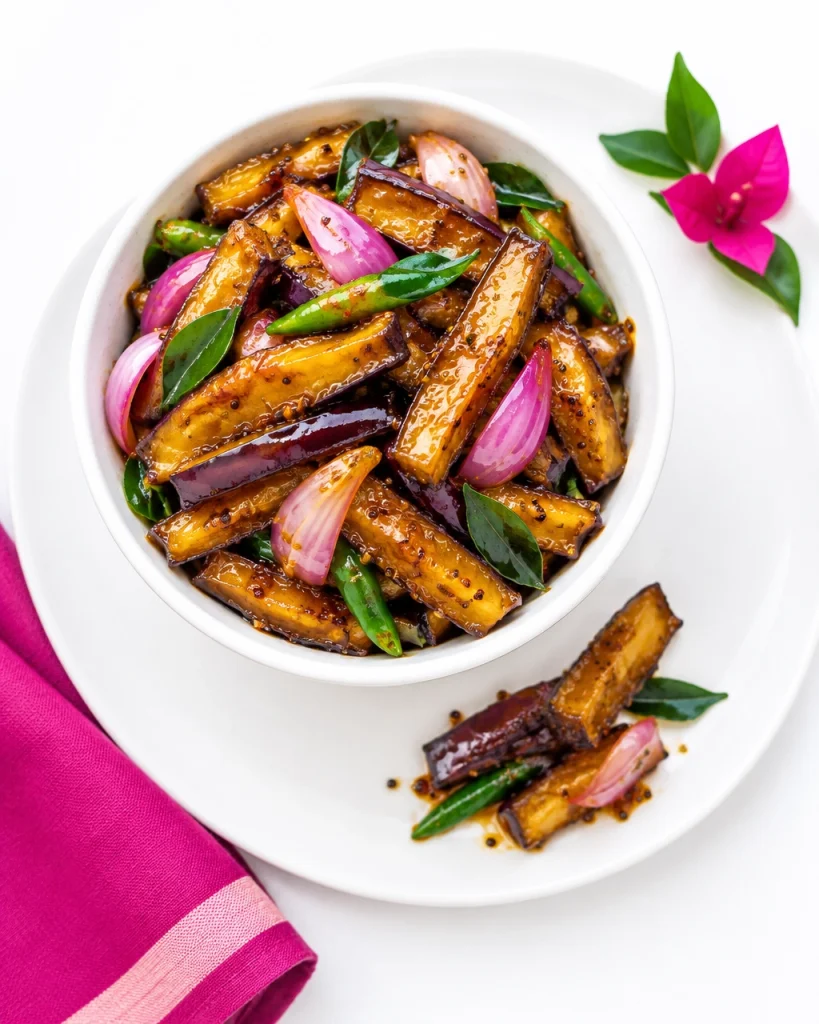
Hi there! If you enjoy dishes that are sweet, sour, spicy and wonderfully savoury all at once, you are going to love wambatu moju.
Also called brinjal moju or brinjal pickle, this Sri Lankan side dish combines golden fried aubergine with red onions, green chillies, mustard, vinegar and sugar. The result is glossy, punchy and deeply moreish (one spoonful rarely stays one spoonful).
Wambatu moju is a celebration-table favourite. You will often find it served with lamprais, yellow rice, biryani or kiribath, Sri Lankan milk rice. It is especially popular at weddings, family gatherings, Avurudu celebrations and festive lunches because you can prepare it ahead of time. In fact, the flavour gets even better after the ingredients rest together.
What You Need
This recipe serves 6 as a side dish.
For the fried brinjal
- 500 g brinjal, eggplant or aubergine
- 1 teaspoon salt, plus more to taste
- ½ teaspoon turmeric powder
- ¾ to 1 cup coconut oil, for frying
For the sweet-and-sour tempering
- 2 medium red onions, sliced into thick petals
- 4–6 green chillies, slit lengthwise
- 1 tablespoon finely sliced ginger
- 4 garlic cloves, thinly sliced
- 1 sprig curry leaves
- 1 teaspoon black mustard seeds
- 1 teaspoon chilli powder
- ½ teaspoon turmeric powder
- 3 tablespoons white vinegar
- 2 tablespoons sugar, or more to taste
- ½ teaspoon salt, or to taste
- 1–2 tablespoons coconut oil, if needed for the tempering
For convenient shopping, browse the Sri Lanka Stores grocery selection, explore the Spices collection, and visit the Coconut Products collection. You can also pick up Ceylon organic turmeric powder and natural white coconut oil.
Kitchen note: Wambatu moju is traditionally made with plenty of oil because the brinjal is fried. You do not need to serve all that oil, though. Drain the fried pieces well and use only a little oil in the final tempering.
Step 1: Salt and Prepare the Brinjal

Wash the brinjal and trim the ends. Cut it into finger-length strips, roughly 1 cm thick. Try to keep the pieces similar in size so they cook evenly.
Place the brinjal in a bowl. Add the salt and ½ teaspoon turmeric, then toss well. Leave it for 10–15 minutes.
This seasons the aubergine and draws out some moisture. After resting, pat the pieces dry with a clean kitchen towel or paper towel. Do not skip this step. Wet brinjal can make hot oil spit, and nobody wants a surprise kitchen fireworks display.
Step 2: Fry the Brinjal
Heat the coconut oil in a wide, deep frying pan over medium-high heat. Test the oil with a small piece of brinjal. It should sizzle immediately without burning.
Fry the brinjal in batches. Do not overcrowd the pan, or the pieces will steam instead of becoming golden. Cook for around 4–6 minutes per batch, turning occasionally, until the brinjal is golden brown and tender.
You want the pieces cooked through but still holding their shape. Avoid frying them until very dark or soft, as they will continue to absorb the tempering later.
Transfer the fried brinjal to a plate lined with paper towels. Allow it to drain while you prepare the sweet-and-sour mixture.
Step 3: Make the Sweet-and-Sour Tempering

Pour off most of the frying oil, leaving about 1–2 tablespoons in the pan. Alternatively, wipe the pan clean and add fresh coconut oil.
Lower the heat to medium. Add the mustard seeds and let them pop gently. Add the curry leaves, sliced ginger and garlic. Stir for 30–45 seconds until fragrant.
Add the red onion petals and green chillies. Cook for 2–3 minutes. The onions should soften slightly while keeping a little bite. You are not trying to caramelise them completely.
Sprinkle in the chilli powder and remaining turmeric. Stir briefly, then add the vinegar, sugar and salt. Mix until the sugar dissolves and the liquid becomes glossy.
Let the mixture simmer for 1–2 minutes. Taste carefully and adjust the balance:
- Add sugar for more sweetness.
- Add vinegar for extra sharpness.
- Add chilli powder or green chilli for more heat.
- Add a pinch of salt to bring everything together.
The mixture should taste bold. Once the fried brinjal joins it, the flavours will mellow slightly.
Step 4: Combine and Marinate

Add the fried brinjal to the pan. Gently fold everything together until the pieces are coated in the sweet-and-sour tempering.
Cook on low heat for 2–3 minutes. Stir carefully so the brinjal does not break apart.
Turn off the heat and transfer the wambatu moju to a clean serving bowl. Let it cool to room temperature.
For the best flavour, cover and refrigerate it for at least 2 hours before serving. Overnight is even better. The vinegar, sugar, mustard and spices will have time to settle into the brinjal (patience tastes good here).
Tips for the Perfect Wambatu Moju
Balance sweet, sour and heat
There is no single perfect ratio because every vinegar and chilli is different. Start with the quantities above, then adjust after the sugar dissolves.
Your finished wambatu moju should be:
- Sweet, but not dessert-like
- Sour, but not harsh
- Spicy, with warmth rather than overwhelming heat
- Salty enough to make the brinjal taste fuller
Choose firm brinjal
Use fresh, firm aubergines with smooth skin. Very soft brinjal contains more moisture and can become mushy during frying.
Keep the pieces thick
Thin strips cook quickly but can collapse. Finger-length batons around 1 cm thick give you a lovely contrast between crisp edges and tender centres.
Fry in batches
Overcrowding lowers the oil temperature. Frying in batches takes a few extra minutes but gives you better colour and texture.
Let it rest
Wambatu moju is delicious warm, but it is usually even better at room temperature after marinating. Make it several hours ahead when you can.
Troubleshooting Your Brinjal Moju
The brinjal turned soggy
The oil may not have been hot enough, or the pan may have been overcrowded. Next time, pat the brinjal drier and fry smaller batches. You can also return the fried pieces to a hot pan for 1–2 minutes before adding the tempering.
The moju tastes too sour
Add ½ teaspoon sugar at a time and stir gently. You can also add a small pinch of salt. Taste after each adjustment because the flavour changes quickly.
The dish is too oily
Place the fried brinjal on several layers of paper towel and press gently. When combining everything, use only enough tempering oil to coat the onions and spices. Serve the moju with a slotted spoon if excess oil settles at the bottom.
The onions became too soft
Cook them for less time before adding the vinegar. Red onions should soften but retain some texture. They are part of the dish’s charm.
The moju is not spicy enough
Add extra slit green chilli or a pinch of chilli powder to the tempering. Add gradually. You can always increase the heat, but you cannot easily remove it (the chilli jar has no reverse button).
How to Serve Wambatu Moju
Serve wambatu moju at room temperature as part of a larger Sri Lankan meal. It pairs beautifully with:
- Fragrant yellow rice
- Creamy kiribath, or Sri Lankan milk rice
- Dhal curry
- Fish, chicken or meat curry
- Papadum
- Coconut sambol
- Seeni sambol
For a full festive spread, serve it alongside our lamprais recipe. The sweet-and-sour brinjal is one of the classic accompaniments tucked into a banana-leaf parcel.
You can also serve it with kiribath and a fiery katta sambol. The creamy rice, hot sambol and glossy wambatu moju make a wonderfully balanced plate.
Storage: Cool the moju completely before refrigerating it in a clean, covered container. Enjoy within 4–5 days. This is a quick pickle, not a shelf-stable canned preserve, so keep it chilled.
Watch the Recipe
There you have it: a colourful, festive side dish with crisp-edged brinjal, tangy vinegar, sweet onions and a cheerful chilli kick. Make it for your next family feast, spoon it beside a plate of rice, and enjoy every bright, bold bite.
Have fun, and happy cooking!