Hi there! (Grab your apron and clear off that counter.) If you have ever stared at a simmering pot of curry and wondered why your chicken dish tastes distinctly different at an authentic Sri Lankan spot compared to your favorite local Indian restaurant, you are certainly not alone.
At first glance, both cuisines share a dazzling universe of spices, vibrant colors, and comforting aromas. But make no mistake: sri lankan chicken curry and Indian chicken curry are culinary cousins with very different personalities. (Think of them like siblings where one is a smooth-talking classical pianist and the other is an energetic, smoky jazz saxophonist.)
In this comprehensive guide, we are diving deep into what makes traditional sri lankan dishes stand out on the global table, how they contrast with Indian curries, and how you can master the authentic Sri Lankan version right in your own kitchen. Let’s get cooking!
1. The Great Spice Debate: Dark Roast vs. Fresh Mash
The single biggest technical difference between these two culinary traditions lies in how they treat their spices.
When you make a standard Indian chicken curry, the flavor profile is frequently built around an onion-and-tomato paste base, accented with fresh-ground or tempered spices (hello, garam masala, cumin, coriander, and turmeric) fried gently in ghee or oil.
Sri Lankan cuisine, on the other hand, relies heavily on dark roasted curry powder.

“Never use unroasted curry powder for robust meats like chicken or beef in Sri Lanka,” as seasoned home cooks will tell you.
By taking coriander, cumin, fennel, dried red chilies, curry leaves, and warming spices like cinnamon and cloves, and dry-roasting them over low heat until they turn a deep, smoky, burnt-umber color before grinding, you unlock an entirely different dimension of flavor. It gives sri lankan chicken curry its signature dark, earthy, and robust backbone that cuts straight through rich poultry.
2. Coconut Milk & The Art of the Split Gravy
Let’s talk about the liquid foundation of your curry.
While South Indian regions (like Kerala) certainly embrace coconut milk, the vast majority of globally recognized Indian chicken curries (such as butter chicken or tikka masala) rely on tomatoes, onions, yogurt, or heavy cream.
In Sri Lanka, coconut is royalty. Coconut milk, freshly grated coconut, and coconut oil form the holy trinity of traditional cooking.
When you simmer a Sri Lankan chicken curry, bone-in chicken pieces are often cooked directly with thin coconut milk or water along with spices, allowing the flavors to penetrate deep into the meat. Near the end of cooking, thick coconut milk is poured in. As it simmers gently, the emulsion breaks slightly: releasing a gorgeous sheen of golden coconut oil to the surface. The result? A gravy that is fiery, creamy, nutty, and tangy all at once.
3. Aromatics Magic: Enter Pandan (Rampe)
If you sniff an Indian kitchen during curry prep, you will likely encounter bay leaves, cardamom pods, cloves, and cinnamon sticks infusing the hot oil.
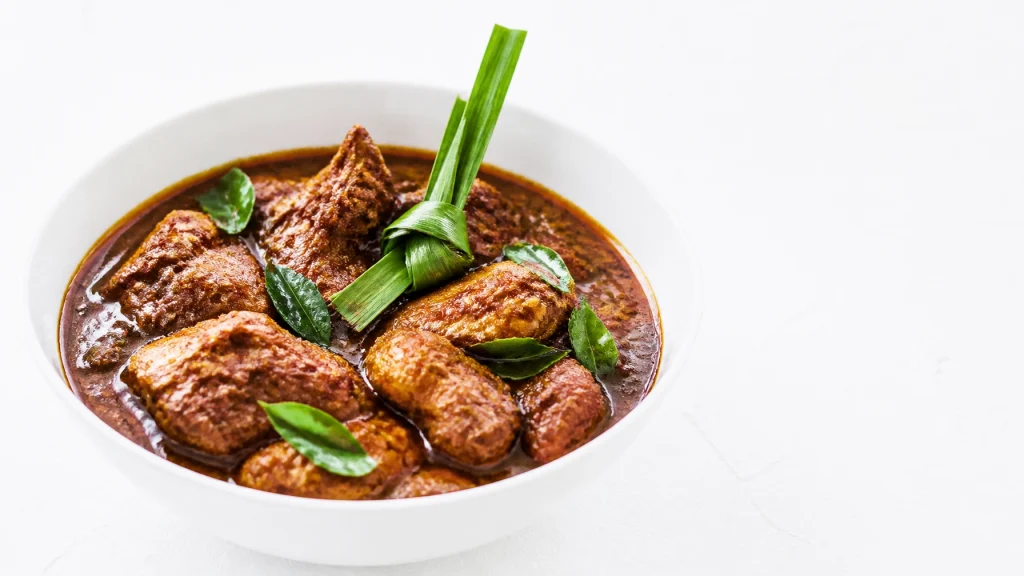
Step into a traditional Sri Lankan kitchen, and you will notice an entirely different secret weapon sizzling away in the clay pot: pandan leaves (known locally as rampe) paired with fresh curry leaves, lemongrass, and red onions.

Pandan imparts a uniquely grassy, subtle vanilla-like fragrance that intermingles with curry leaves and roasted spices. It is an unforgettable aromatic signature that rarely makes an appearance in mainstream Indian chicken curries, yet defines the soul of traditional sri lankan dishes.
4. Side-by-Side Comparison Matrix
To make things crystal clear, let’s break down the core differences at a glance:
| Feature | Sri Lankan Chicken Curry | Indian Chicken Curry (Generalized) |
|---|---|---|
| Spice Base | Dark roasted curry powder (smoky, earthy, deep brown) | Lighter masalas, garam masala, turmeric-forward |
| Primary Fat/Liquid | Coconut milk, coconut oil, thin or thick coconut gravies | Ghee, oil, tomato-onion pastes, yogurt, cream |
| Key Aromatics | Pandan leaves (rampe), curry leaves, red onions | Bay leaves, cinnamon, cloves, kasuri methi |
| Gravy Texture | Thinner, looser, designed for fluffy white rice | Thicker, clings easily to naan and flatbreads |
| Cut of Meat | Usually bone-in pieces for maximum flavor release | Both bone-in and boneless (restaurants love boneless) |
5. Master the Recipe: Authentic Sri Lankan Chicken Curry
Ready to taste the difference for yourself? Let’s whip up an authentic, soul-warming pot of sri lankan chicken curry.
For the best results, make sure you source quality ingredients. You can explore a wide variety of authentic ingredients over at Sri Lanka Stores Curries & Gravies and browse more culinary inspiration directly on Sri Lanka Stores.

Ingredients List
- Chicken: 1 kg bone-in chicken pieces (skin removed, washed and drained)
- Spices:
- 2 tbsp Sri Lankan Dark Roasted Curry Powder
- 1 tbsp raw chili powder (adjust to your heat tolerance)
- 1/2 tsp turmeric powder
- 1 tsp black pepper
- Aromatics:
- 1 medium red onion, sliced
- 3 cloves garlic, minced
- 1 inch ginger, grated
- 1 sprig fresh curry leaves
- 1 piece pandan leaf (rampe) about 2 inches long
- 1 stick cinnamon
- 2 cardamom pods
- Liquids & Seasoning:
- 1 cup thin coconut milk (or water)
- 1/2 cup thick coconut milk
- 1 tbsp coconut oil or vegetable oil
- Salt to taste
- A squeeze of fresh lime juice (optional, added at the very end)
Step-by-Step Instructions
- Prep the Chicken: In a large bowl, combine your clean, bone-in chicken pieces with the turmeric powder, half of your roasted curry powder, and a generous pinch of salt. Mix well and let it marinate for 15-20 minutes while you prep your aromatics.
- Sizzle the Aromatics: Heat your coconut oil in a heavy-bottomed pan or clay pot over medium heat. Toss in the sliced onions, minced garlic, ginger, cinnamon stick, cardamom pods, curry leaves, and your prized pandan leaf. Sauté until the onions turn translucent and the kitchen fills with an intoxicating aroma.
- Bloom the Spices: Add the remaining dark roasted curry powder and chili powder directly into the fragrant oil. Stir constantly for about 30 seconds (don’t let it burn!).
- Simmer the Chicken: Add the marinated chicken pieces to the pan. Toss them vigorously so every piece gets coated in that spiced oil goodness. Cook for about 5 minutes until the chicken outer layer changes color.
- Pour and Cover: Pour in your thin coconut milk (or water). Bring the mixture to a rolling boil, then reduce the heat to medium-low, cover with a lid, and let it simmer for 20 minutes until the chicken is tender and juicy.
- Finish with Creaminess: Remove the lid, pour in your rich thick coconut milk, and let it gently bubble uncovered for another 5 minutes until the gravy thickens and a gorgeous oil sheen forms on top.
- Season & Serve: Turn off the heat, stir in a bright squeeze of fresh lime juice, taste for salt, and serve piping hot alongside steaming white rice and a side of pol sambol!
Watch the Video Tutorial
Want to see the exact simmering technique in action? Check out this quick video walkthrough:
Wrapping Up
While both Indian and Sri Lankan curries hold a permanent place in our hearts (and weekly meal rotation), mastering the unique elements of sri lankan chicken curry: from the smoky depth of dark roasted spices to the silky embrace of coconut milk and fragrant pandan: gives you an incredible culinary superpower.
Give this recipe a try this weekend, impress your family, and let us know how your aromatic masterpiece turned out. Have fun cooking, and see you in the next recipe!