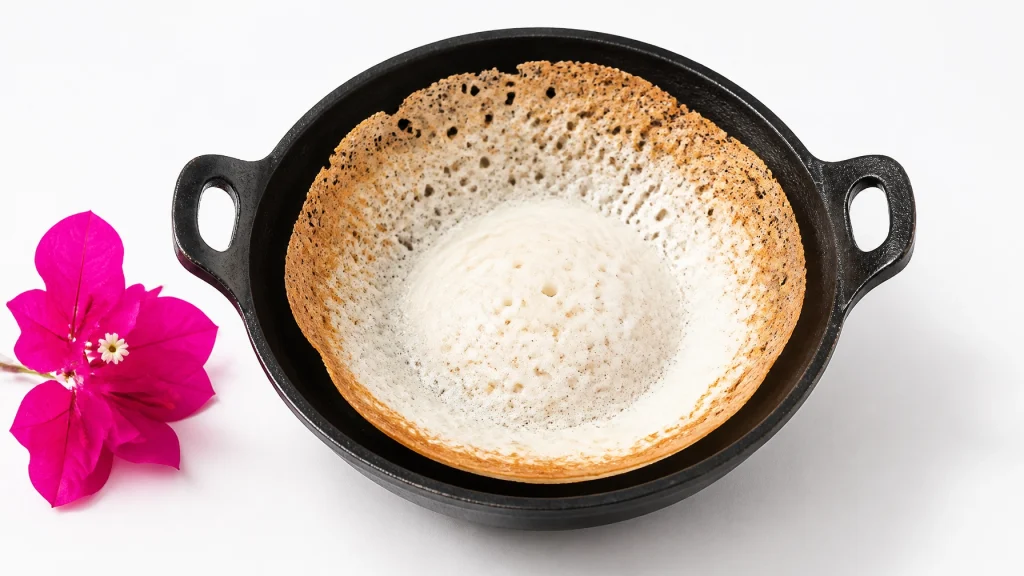
Hi there! Your hopper maker is hot, your batter is ready, and yet your appa is sticking, tearing, or coming out softer than a sleepy pillow.
Don’t worry. You are not alone.
Sri Lankan hoppers look wonderfully simple, but the right texture depends on a few small details: batter consistency, fermentation, pan temperature, oil, and timing. Fix those, and you can create crisp, lacy-edged hoppers with a soft center at home.
This guide focuses on the most common hopper maker and appam pan problems, including issues with electric hopper makers and traditional stovetop pans.
Your Hopper Ingredient Checklist
Before troubleshooting, start with a reliable batter. You can find Sri Lankan pantry staples through the Sri Lanka Stores Grocery category and flavor boosters in the Spices category.
For approximately 8–10 hoppers, gather:
- 2 cups fine rice flour
- 1½ cups coconut milk
- ½–1 cup lukewarm water, as needed
- 1 teaspoon active dry yeast
- 1–2 teaspoons sugar
- ½ teaspoon salt
- 1 teaspoon coconut oil, plus more for wiping the pan
- Optional: eggs for egg hoppers
- Optional: black pepper, chili, or a pinch of spice for serving

Your batter should be smooth and pourable. Think thin pancake batter or light cream. It should flow from the ladle in a steady stream, not plop out like mashed potatoes.
First, Check Your Hopper Maker
Whether you use a traditional appam pan or an electric hopper maker, check these basics first:
- Clean the cooking surface. Remove burnt batter and sticky residue.
- Check the heat setting. A low or faulty thermostat can leave the center raw.
- Inspect the coating. Scratched non-stick surfaces often cause sticking.
- Use the lid if your appliance has one. Steam helps cook the center.
- Do not overfill the pan. Too much batter creates a thick, gummy middle.
- Keep the surface level. An uneven appliance can make batter collect on one side.
If you are using an electric appliance, unplug it before checking the plate, cord, or thermostat. Your hopper should be dramatic. Your kitchen equipment should not be.
Problem 1: Batter Slides Down the Sides
What you see
You pour the batter into the center and swirl the pan, but the batter immediately runs back down. You get a thick pancake instead of a bowl-shaped hopper.
Why it happens
The pan may be too cold. Your batter may also be too thin, too thick, or not properly mixed.
How to fix it
- Preheat the hopper maker on medium or medium-high.
- Test the surface with a few drops of water. They should sizzle and evaporate, but not vanish violently at once.
- Stir the batter gently.
- Pour a small ladleful into the center.
- Lift and swirl the pan quickly, coating the sides in one confident motion.
- Cover immediately.
If the batter still refuses to cling, add a little rice flour: about 1 teaspoon at a time. Mix well and test again.
If the batter is too thick to spread, add lukewarm water 1 tablespoon at a time. Small adjustments work best.
Problem 2: The Hopper Sticks to the Pan
What you see
The rim looks cooked, but the hopper refuses to lift. When you finally remove it, half stays behind.
Why it happens
The pan may be dry, under-seasoned, too cool, or coated with old burnt batter. You may also be trying to remove the hopper too soon.
How to fix it
- Wipe the pan with a very thin film of coconut oil before cooking.
- Season a new metal or cast-iron pan with oil before its first use.
- Avoid pouring a pool of oil into the pan. Too much oil can fry the edges unevenly.
- Let the hopper cook until the rim looks dry and begins pulling away.
- Slide a thin spatula carefully under the edge before lifting.
For a non-stick hopper maker, you usually need only a light wipe of oil. If the surface is badly scratched, sticking may continue no matter how carefully you cook.
Problem 3: The Hopper Tears When You Remove It
What you see
Your hopper looks beautiful until you lift it. Then the rim cracks, the center splits, or the entire thing folds in on itself.
Why it happens
The hopper may be undercooked, too thin, or too fragile because the batter lacks body. Removing it early is another common culprit.
How to fix it
- Cook until the edges are dry and lightly golden.
- Keep the lid on long enough for the center to set.
- Use slightly less water if the batter is extremely thin.
- Add 1 teaspoon of rice flour if the batter feels too delicate.
- Oil the pan lightly between batches.
- Remove the hopper gently, starting at the edge.
Your first hopper may still be the “test hopper.” That is perfectly normal (and conveniently delicious).
Problem 4: The Edges Are Soft Instead of Crispy
What you see
The hopper has the right bowl shape, but the rim is pale, thick, and floppy.
Why it happens
The pan may not be hot enough. The batter may be too thick, under-fermented, or spread too heavily around the sides.
How to fix it
- Increase the heat slightly.
- Thin the batter with 1 tablespoon of water.
- Swirl faster so the sides receive a thin coating.
- Avoid adding too much batter.
- Cook uncovered for the final 20–30 seconds if the rim needs extra drying.
- Wipe excess oil from the sides before pouring the next batch.
A crispy edge needs direct heat. The soft center needs steam. That is why the best method is to swirl, cover, and cook until the edge turns golden.
For more batter guidance, see The Secret to Crispy, Lacy Sri Lankan Hoppers.
Problem 5: The Center Is Gummy or Raw
What you see
The outside is browned, but the center remains wet, sticky, or heavy.
Why it happens
The center pool may be too thick. The pan may also be too hot around the edges but too cool overall, or you may have removed the lid too quickly.
How to fix it
- Use less batter per hopper.
- Spread the batter thinly around the sides, leaving only a modest pool in the middle.
- Cover the pan for 2–3 minutes.
- Lower the heat slightly if the rim browns before the center cooks.
- Add 30 seconds of cooking time if needed.
- Let the batter ferment until you see bubbles and a slightly risen surface.
Avoid whisking the batter aggressively immediately before cooking. Stir gently instead. Too much mixing can knock out the air that helps create a light texture.
Problem 6: Your Hoppers Are Dense and Flat
What you see
The hopper has no airy texture. It is thick, flat, and more like a rice pancake.
Why it happens
The batter may not have fermented enough. Your yeast may be inactive, the room may be cool, or the batter may be too thick.
How to fix it
Proof active dry yeast in lukewarm water with sugar for 10–15 minutes. It should become foamy. If it stays completely flat, use fresh yeast.
Mix the batter, cover it, and leave it in a warm place for 2–6 hours, depending on your recipe and room temperature. In cooler weather, it may need longer. In very warm weather, check it sooner to prevent over-fermentation.
The batter should smell pleasantly fermented, not sharply sour. If it becomes strongly acidic, refrigerate it and use it soon.
Problem 7: The Hopper Burns Before It Cooks
What you see
The rim turns dark or burns while the middle is still uncooked.
Why it happens
The heat is too high, the pan is too thin, or the appliance’s thermostat is cycling unevenly.
How to fix it
- Reduce the heat to medium.
- Allow the pan to cool for 30 seconds between batches.
- Use less batter.
- Keep the lid on so steam cooks the center.
- Move the pan slightly if your stovetop has a hot spot.
- For an electric hopper maker, test a lower setting and avoid preheating for too long.
A golden-brown edge is what you want. Black and brittle means the hopper maker needs a little less enthusiasm.
Problem 8: The Batter Has No Bubbles
What you see
The batter looks completely still after resting. Your hoppers come out heavy and bland.
Why it happens
The yeast may be expired, the water may have been too hot, or fermentation may have been too short. Salt added early can also slow yeast activity.
How to fix it
Use lukewarm: not hot: water when activating yeast. Let the batter rest in a warm, draft-free spot. For a more dependable result, add salt after fermentation and stir it in gently before cooking.
If your batter refuses to bubble after several hours, start again with fresh yeast. It is better than spending the evening arguing with a bowl.
How to Make an Egg Hopper
Once your plain hoppers are behaving, try a traditional egg hopper.

- Pour and swirl the batter as usual.
- Crack one egg into the center.
- Season with salt and black pepper.
- Cover and cook until the white is set.
- Remove while the yolk is still soft, if that is your preference.
Serve your egg hoppers with Katta Sambol or Pol Sambol. Coconut sambol plus a runny yolk is a tiny breakfast miracle.
The Quick Hopper Troubleshooting Checklist
Before your next batch, remember:
- Batter slides: Adjust the heat and batter thickness.
- Hopper sticks: Lightly oil and wait until the rim releases.
- Hopper tears: Cook longer and remove gently.
- Edges stay soft: Use thinner batter and slightly higher heat.
- Center stays raw: Use less batter and cover the pan.
- Hoppers are dense: Check yeast and fermentation.
- Edges burn: Lower the heat and allow the appliance to cool briefly.
- No bubbles: Replace inactive yeast and give the batter more time.
Once your hopper maker is properly heated and your batter is smooth, the process becomes much easier. You will soon be swirling appa like a pro: and wondering why the first batch ever caused such a fuss.
For another beginner-friendly method, follow How to Make the Perfect Sri Lankan Hopper in 5 Minutes.
Serve your hoppers hot with curry, sambol, or a cup of Ceylon tea. Have fun, keep your first hopper as the official tester, and enjoy every crispy bite!