Hi there! If you love bold flavors, this lunu miris recipe belongs in your kitchen.
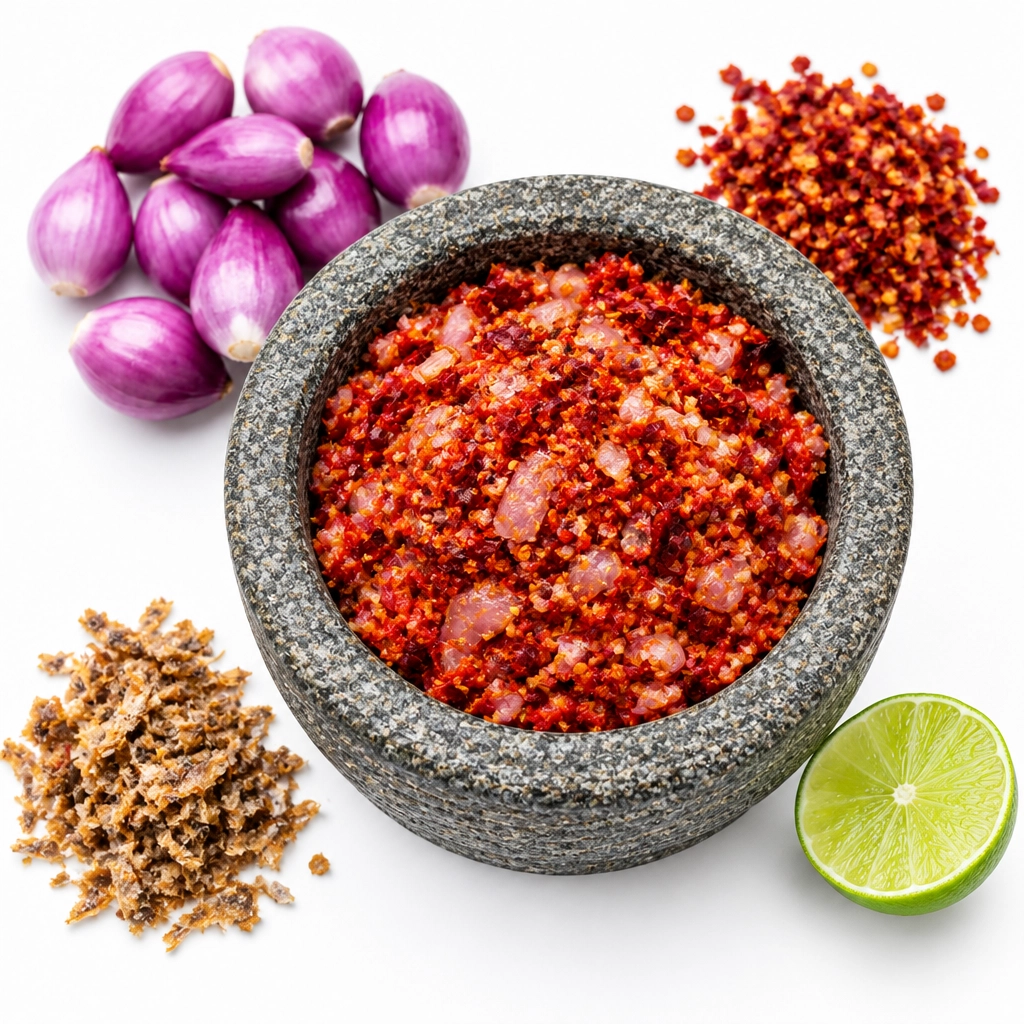
Lunu miris is Sri Lanka’s fiery onion and chili sambol. It combines red onions or shallots, dried chili, lime, salt, and optional Maldive fish into a coarse, punchy relish. There is no cooking involved. Just a little chopping, pounding, and tasting (plus perhaps a brave sip of water).
Its classic partner is kiribath, Sri Lankan milk rice. The creamy, coconut-rich rice softens the heat, while lunu miris cuts through the richness with sharp lime, chili warmth, and savory depth. Together, they create one of Sri Lanka’s most loved breakfast and celebration combinations.
You can also serve it with hoppers, string hoppers, roti, plain rice, or bread. Ready? Let’s make it.
What Is Lunu Miris?
The name lunu miris translates roughly to “salt chili.” It is a fresh, uncooked sambol traditionally prepared by pounding ingredients in a stone mortar.
The result should be:
- Fiery but balanced.
- Tangy from fresh lime.
- Savory if you include Maldive fish.
- Coarse and textured rather than smooth.
- Moist, but never watery.
Lunu miris and katta sambol are sometimes used interchangeably. In many home kitchens, the names vary by family and region. This version focuses on the classic red onion, dried chili, Maldive fish, lime, and salt combination.
Lunu Miris Ingredients
This recipe makes about 3 small servings and takes roughly 10 minutes.
- 1 cup finely chopped red onion or Asian shallots : browse the Grocery category
- 2 teaspoons dried red chili flakes : explore Sri Lanka Stores spices
- ½ teaspoon chili powder, optional, for extra color and heat : shop the Spices category
- 1 tablespoon Maldive fish flakes or chips, optional but traditional : shop Maldive fish
- ½ teaspoon salt, plus more to taste : browse Grocery
- 2 teaspoons fresh lime juice, or the juice of about ½ small lime : browse Grocery
Heat guide: Start with less chili than you think you need. You can always add more. Unfortunately, you cannot un-add a mountain of chili (we have all learned this the dramatic way).

How to Make This Lunu Miris Recipe
1. Prepare the ingredients
Peel and finely chop the red onion or shallots. Small pieces make the pounding easier and help the onion blend into the chili without turning completely smooth.
If you are using Maldive fish chips, check for any very large pieces. Break them up with your fingers first.
Fresh lime makes a real difference here. Squeeze it just before serving so the sambol tastes bright and lively.
2. Pound the Maldive fish
Add the Maldive fish and salt to a clean mortar. Pound with the pestle until the fish breaks into small flakes and combines with the salt.
Use firm presses and short pounding motions. You are not trying to create a fine powder. You simply want to soften the fish so it spreads evenly through the sambol.

3. Add the onions and chili
Add the chopped onion, dried chili flakes, and optional chili powder to the mortar.
Pound gently at first. Then use a circular grinding motion to press the onion into the chili and Maldive fish. The onion will release some juice, which helps bind the ingredients.
Keep scraping the sides of the mortar as you work. This helps you create an even mixture without over-processing the sambol.
4. Grind to a coarse paste
Continue pounding until the lunu miris becomes moist and red, with visible onion pieces and chili flakes.
Stop before it becomes smooth. A coarse paste gives you the traditional texture and a more interesting bite. Think rustic relish, not chili smoothie.

5. Finish with lime and adjust
Add the fresh lime juice and mix with the pestle or a spoon.
Taste carefully. Adjust the balance with:
- More lime for brightness.
- A pinch more salt for depth.
- More chili flakes for heat.
- A little extra onion if the sambol is too fiery.
Serve immediately at room temperature.
Tips for the Perfect Coarse Texture
Use a mortar and pestle if you can
A mortar gives you more control than a blender or food processor. It releases the onion and chili oils gradually, while keeping the mixture textured.
If you use a food processor, pulse in very short bursts. Stop as soon as the ingredients combine. Over-processing can make the onion watery, bitter, or overly pungent.
Chop the onion before pounding
Large onion pieces take longer to break down. Finely chop them first so you can focus on crushing and combining rather than pulverizing.
Add lime at the end
Lime juice adds moisture. If you add it too early, you may be tempted to keep pounding, which can turn your sambol into a thin paste. Finish with lime once the texture is right.
Balance heat with onion
For gentler heat, reduce the chili flakes and add a little more onion. You can also use a milder chili powder for color without making the sambol fiercely hot.
For serious heat, increase the dried chili gradually. Taste after each addition. Your future self will thank you.
Vegetarian and Vegan Lunu Miris
To make this recipe vegetarian or vegan, simply leave out the Maldive fish.
You will still get a delicious sambol from the red onion, dried chili, lime, and salt. Add a little extra onion for body and adjust the lime carefully.
The Maldive fish adds cured, savory umami, but it is not essential. Many Sri Lankan families make excellent fish-free lunu miris (especially for vegetarian guests). You can also add a small pinch of roasted curry powder for extra depth, although that is optional and not part of the simplest traditional version.
Troubleshooting Your Sambol
It is too salty
Add more finely chopped onion and a little extra lime juice. Mix well and taste again.
Avoid adding water. It will dilute the flavor and make the sambol watery.
It is too hot
Add more onion. This is the most reliable fix.
You can also serve smaller portions alongside extra kiribath, coconut roti, or plain rice. Creamy and starchy foods help soften the chili heat.
The sambol is watery
You may have added too much lime or pounded the onion too aggressively.
Add a little more chopped onion and chili flakes to thicken it. Let it sit for a few minutes, then stir again. Next time, add the lime only after you reach the correct coarse texture.
The sambol is turning dark
A little color change is normal as raw onion sits. To keep it bright, use fresh lime, avoid over-processing, and serve it soon after mixing.
Store leftovers in a clean, airtight container in the refrigerator and use them within two days. The flavor is best when freshly made.
What to Serve with Lunu Miris
Kiribath: the essential pairing
Serve lunu miris with wedges of kiribath, or Sri Lankan milk rice. The soft, coconut-rich rice balances the sambol’s chili, salt, and lime beautifully.
For more Sri Lankan breakfast inspiration, explore our traditional Sri Lankan dishes guide, which features kiribath and other classic dishes.
String hoppers
String hoppers, also called idiyappam, are delicate nests of steamed rice-flour noodles. Spoon lunu miris over them or serve it alongside a mild coconut milk curry.
Our Sri Lankan pol sambol recipe also includes string hoppers among its classic serving suggestions. Together, pol sambol and lunu miris create a lively two-sambol breakfast spread.
Hoppers
Lunu miris is especially good with Sri Lankan hoppers. Try it with plain hoppers or egg hoppers, using the crisp edges to scoop up the sambol.
If you are new to making them, follow our guide to the perfect Sri Lankan hopper.
Rice, curry, roti, and bread
Add a spoonful to rice and curry, spread it over coconut roti, or tuck it into warm bread. A little goes a long way, so start with a small amount and build your plate from there.
Watch the Technique
Want to see the hand-pounded method in action?
for a visual guide to the mortar-and-pestle technique.
The key detail to notice is the texture. Stop pounding while the sambol is still coarse. That is where the magic lives.
Final Thoughts
This easy lunu miris recipe turns a handful of everyday ingredients into an unforgettable Sri Lankan sambol. You get heat from the chili, sharpness from the lime, sweetness from the onion, and savory depth from the optional Maldive fish.
Make it fresh. Keep it coarse. Taste as you go.
Then serve it beside warm kiribath and enjoy a classic Sri Lankan pairing at home. Have fun, and keep a glass of water nearby!