Hi there! If you are exploring Sri Lankan recipes, start with kiribath. This creamy milk rice needs only a few ingredients, yet it carries plenty of meaning.
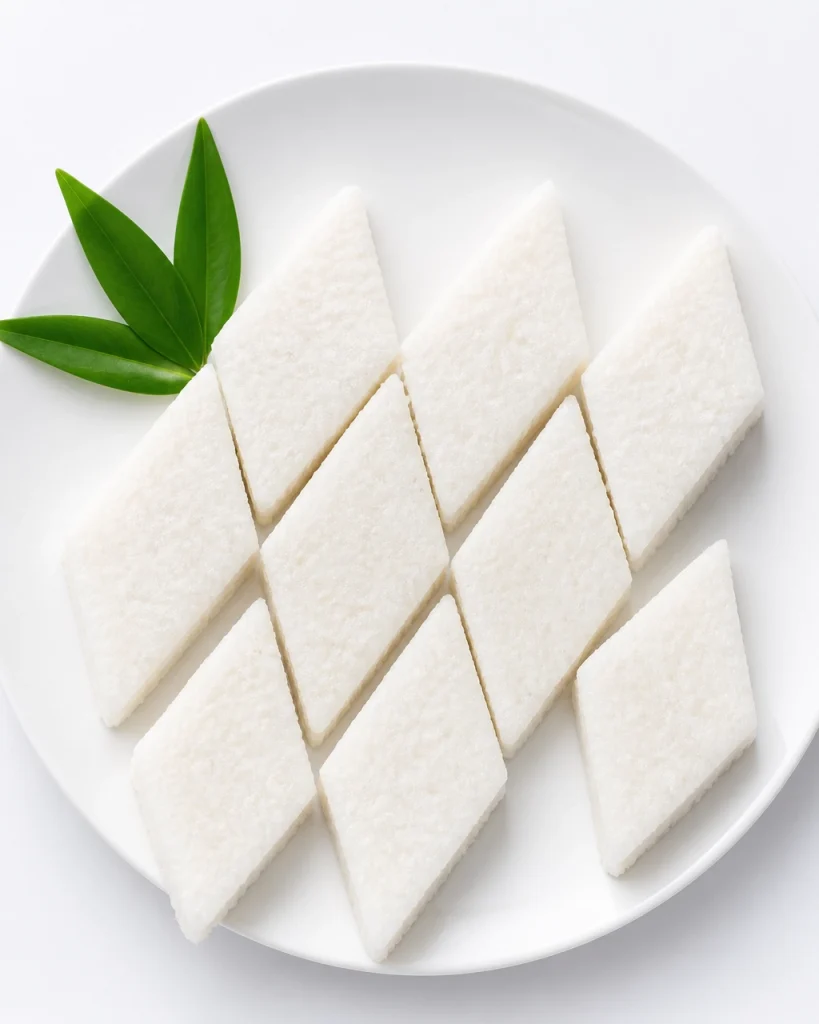
Kiribath is made by cooking rice until soft, stirring in thick coconut milk, and pressing the mixture into a flat layer. Once it sets, you cut it into neat diamonds or squares. Simple, comforting, and wonderfully satisfying (the kind of dish that makes a humble rice pot feel party-ready).
In Sri Lanka, kiribath is traditionally prepared on the first day of each month, at Sinhala and Tamil New Year, and during auspicious occasions such as birthdays, weddings, religious celebrations, and housewarmings. It represents prosperity, abundance, and a positive beginning.
Many families serve it as the first dish of a celebration. That tradition makes kiribath more than one of the country’s beloved traditional Sri Lankan dishes. It is a symbol of sharing good fortune with the people around you.
What Does Kiribath Taste Like?
Kiribath has a soft, creamy texture and a gentle coconut flavour. It is lightly salted rather than sweet, which makes it incredibly versatile.
You can serve it with something fiery, sweet, or savoury. A spoonful of lunu miris adds chilli, onion, lime, and plenty of character. Palm jaggery brings sweetness. Seeni sambol adds a rich, caramelised onion flavour.
The rice should hold together when cut but remain soft enough to melt in your mouth. Think of it as a firm, sliceable coconut rice pudding: only savoury and made for sambols.
Ingredients for Sri Lankan Milk Rice
This recipe serves 4–6 people.
- 2 cups white raw rice, preferably Sri Lankan samba, kakulu, or another rice that becomes soft and slightly sticky
- 3½–3¾ cups water
- 400 ml thick, full-fat coconut milk
- 1½–2 teaspoons salt, divided
- A little water, coconut milk, or neutral oil for shaping and cutting
You can explore the Ceylon food collection for Sri Lankan pantry staples. For the creamy finishing ingredient, browse the coconut products collection.
Choosing the Right Rice
Rice makes a big difference here. Choose a variety that softens and releases starch as it cooks. Samba, kakulu, jasmine, or some medium-grain white rice can work well.
Avoid rice that stays very separate and firm, such as many parboiled varieties. Kiribath needs soft grains that gently break down and bind together.
If you are using a rice variety for the first time, cook a small test batch. Your rice may need slightly more or less water. No two pots are exactly alike (and rice can be surprisingly opinionated).
How to Make Kiribath
1. Rinse the Rice
Place the rice in a bowl and rinse it several times under cool water. Swirl the grains gently with your fingers, then drain.
Continue until the water looks mostly clear. This removes excess surface starch and helps you control the final texture.
Drain the rice well before cooking.

2. Cook the Rice Until Soft
Add the rinsed rice, water, and 1 teaspoon of salt to a heavy-bottomed pot. Bring the mixture to a boil.
Stir once, cover the pot, and reduce the heat to low. Cook for about 15–25 minutes, depending on your rice and cooking method.
The rice should be very soft and tender. It should absorb most of the water and begin to look slightly creamy. If the grains still have a firm centre, add a small splash of water and continue cooking.
You can also use a rice cooker. Use the same basic method, but check the rice before moving to the next step. Kiribath requires softer rice than an everyday bowl of steamed rice.
3. Season the Coconut Milk
Pour the thick coconut milk into a small bowl. Add the remaining salt and stir until dissolved.
Taste the coconut milk. It should taste lightly salty, not bland. Adjust the seasoning now, because it is harder to distribute salt evenly once the rice becomes thick.
For the best flavour, use thick coconut milk rather than a thin, watery extract. Full-fat canned coconut milk works well if fresh coconut milk is not available.

4. Add the Coconut Milk
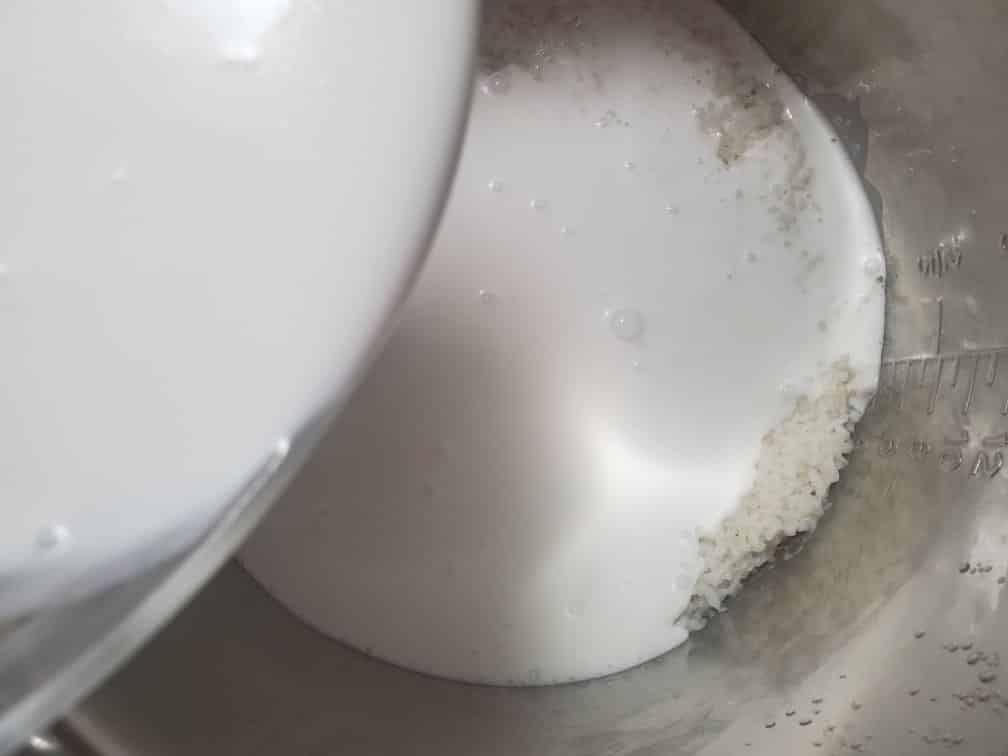
When the rice is fully cooked, add the salted coconut milk while the rice is still hot.
Stir gently but thoroughly. Fold the coconut milk through the rice, allowing some grains to break down. The mixture should become cohesive, glossy, and creamy.
Return the pot to low heat. Stir occasionally for 3–8 minutes, until the coconut milk is absorbed and the rice becomes thick enough to hold its shape.
Do not boil the coconut milk aggressively. High heat can cause the coconut milk to split or develop a strong cooked flavour. Gentle heat is your friend here.
5. Press the Kiribath Into a Dish
Prepare a shallow plate, tray, or heatproof dish. A banana leaf is traditional, but parchment paper works perfectly well.
Transfer the hot kiribath to the dish. Spread it into an even layer about 2–3 cm thick.
Moisten a spoon, spatula, or piece of parchment paper with water or coconut milk. Use it to press the rice firmly and smooth the surface.
Press from the centre towards the edges. Keep the thickness even so every piece sets at the same rate. Do not press so hard that you turn the rice into a paste. You want compact, tender rice with a little texture.

6. Let It Set and Cut Into Diamonds
Allow the kiribath to cool for 10–30 minutes. It will firm up as it rests.
Lightly moisten a sharp knife with water or coconut milk. Cut the slab into squares or diamond shapes.
For classic diamond pieces, cut diagonal lines in one direction, then diagonal lines in the opposite direction. Wipe and moisten the knife as needed to prevent sticking.
Serve the kiribath warm or at room temperature.

Tips for Perfect Kiribath Texture
- Use soft-cooking rice. The rice must absorb liquid and release enough starch to bind.
- Follow the liquid balance. For 2 cups of rice, begin with about 3½–3¾ cups of water and 400 ml thick coconut milk. Adjust slightly for your rice variety.
- Add coconut milk while the rice is hot. Cold rice will not absorb it as evenly.
- Cook gently after adding coconut milk. Keep the heat low and stir until creamy. Avoid a hard boil.
- Shape it immediately. Kiribath firms as it cools, so transfer and press it while hot.
- Moisten your tools. A damp spatula and knife make shaping and cutting much easier.
- Press evenly. A uniform slab gives you clean, attractive pieces.
What to Serve With Kiribath
Kiribath is delicious with a selection of bold Sri Lankan accompaniments.
Lunu Miris
Lunu miris is the classic partner. This spicy sambol combines onion, dried chilli, salt, and lime. Some versions include Maldive fish for extra savoury depth.
The sharp heat cuts through the richness of the coconut milk beautifully. If you love a little fire at breakfast, this is the pairing for you.
You can discover more ideas in Sri Lanka Stores’ sambols, mallums, and sides collection.
Jaggery
For a sweet and simple serving, add pieces of kithul or coconut jaggery. The deep caramel flavour pairs wonderfully with the creamy rice.
This option is especially lovely for children or anyone who prefers a gentler plate.
Seeni Sambol
Seeni sambol is made with slowly cooked onions, chilli, sugar, and spices. It is sweet, savoury, spicy, and richly caramelised.
Serve a small spoonful beside each piece of kiribath. It is a festive combination with plenty of flavour.
You can also serve kiribath with a Sri Lankan chicken curry, fish curry, or another dish from the rice and main dishes collection.
Kiribath Troubleshooting Guide
The mixture is too runny
Continue cooking over low heat, stirring often, until excess liquid evaporates. Do not rush it with high heat. A little patience will save the day.
The kiribath will not set
The rice may need more cooking or the mixture may contain too much coconut milk. Return it to low heat and stir until thick and cohesive, then press it again while hot.
The rice is still firm
Add a splash of hot water, cover, and cook until the grains soften. Once tender, add the coconut milk and continue with the recipe.
The kiribath is too dry
Stir in a small amount of warm coconut milk. Add it gradually: you can always add more, but you cannot easily take it back out.
The coconut milk has split
The heat was probably too high or the mixture cooked for too long. The kiribath may still be enjoyable, but next time use low heat and stop cooking as soon as the rice becomes creamy and thick.
The pieces stick to the knife
Moisten the knife between cuts. You can also wrap the blade in food-safe plastic wrap before lightly dampening it. Clean cuts are worth the tiny bit of extra effort.
Watch a Kiribath Cooking Video
Sometimes seeing it in action makes all the difference! Check out this fantastic tutorial from The Flavor Bender to see the layering technique in detail:
Seeing the rice soften, thicken, and spread can make the process feel much easier the first time.
Kiribath is proof that a few everyday ingredients can create something deeply comforting and meaningful. Make it for a celebration, a family breakfast, or simply because you are craving a taste of Sri Lanka.
Serve it with lunu miris, share it generously, and enjoy every creamy diamond-shaped piece. Have fun!